Peru: Cajamarca, Huaraz, Huacachina, Lima, Paracas, Arequipa, Cusco (Week 14-19)
Writing this month’s blog is proving to be one of the most difficult and dragging for me. Particularly given the level of exhaustion I’ve hit in my travels. Still, I know that not writing my experiences in Peru will be something I later feel regret over, especially because they have been ones that represent excitement, frustration, difficulty, appreciation, test of patience, love, astonishment and more. They are all experiences I don’t want to push away from reflecting on and understanding deeper. And that is why, here goes…
Cajamarca
My first major stop after crossing the border from Ecuador to Peru was Cajamarca. I had been reading in online articles that Cajamarca was a northern stop en route south that has charm and places to visit for those interested in pre Incan history. *Nerd Alert* I was particularly interested in visiting a pre-Incan aqueduct that demonstrated how people sourced their water and channeled it in ways to reach areas where it was most needed, kilometers through and passing through inclines and declines. And all of this done with simple tools, by hand, through rock and soil, no machinery obvi. How fascinating is that?!
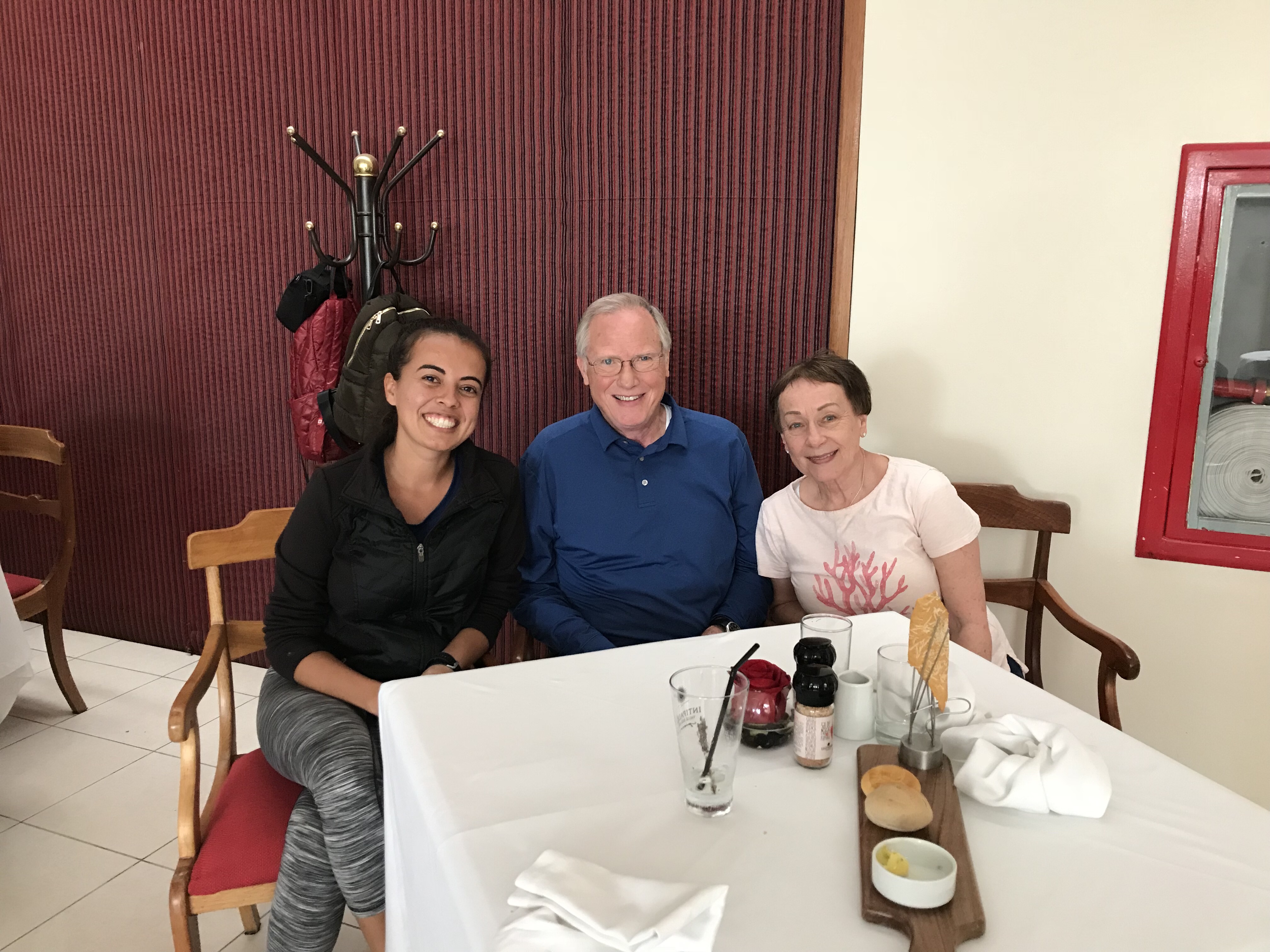
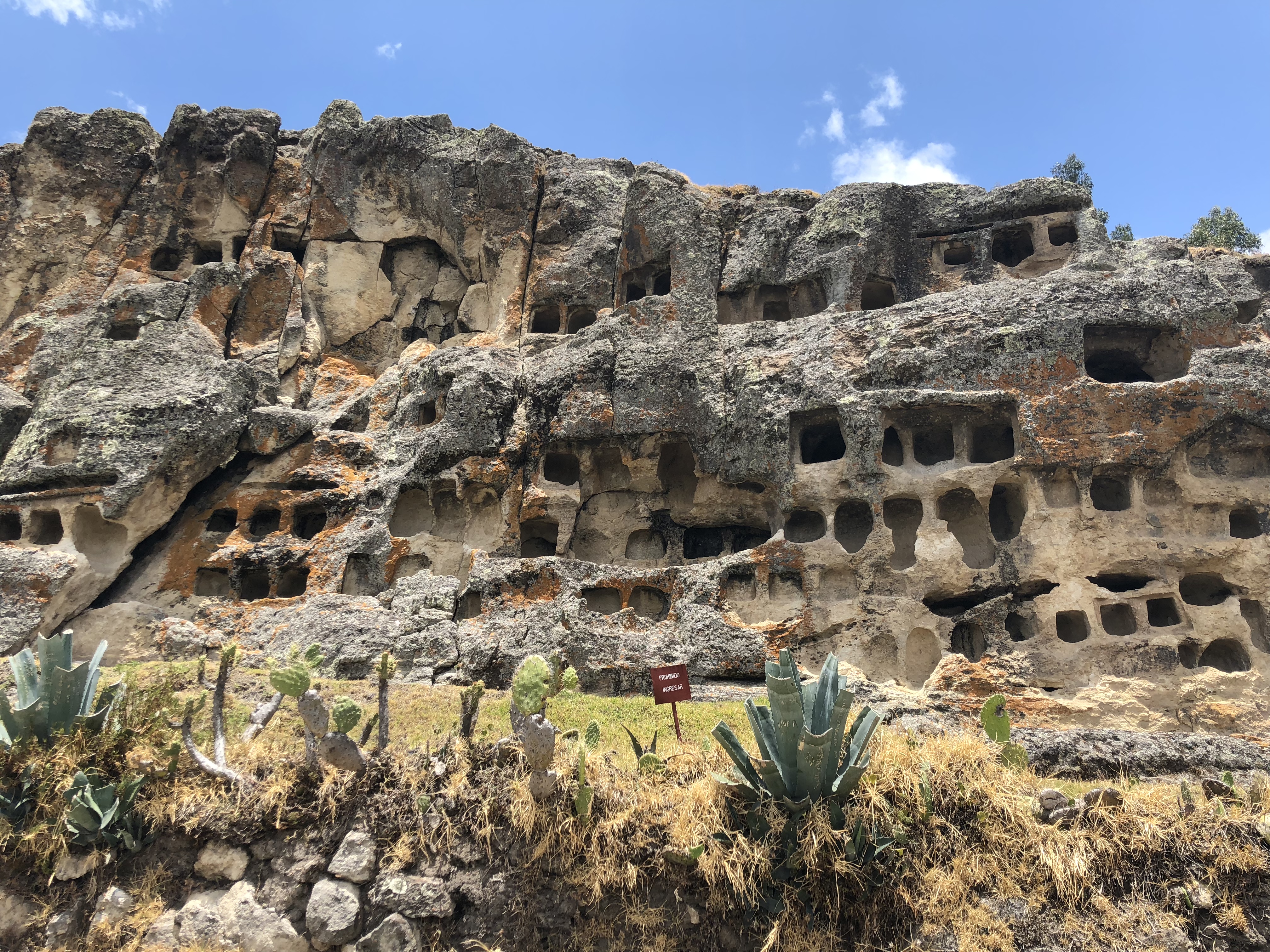
The town center was cute and charming. The outskirts were a bit sketchy. During my day visit to the aqueduct I met an older couple from Arizona. If I remember correct it all started when I offered a piece of coca candy to Janice while we sat next to each other in our tour van (but with my poor memory I may be wrong). She was initially surprised I spoke English and from then on we chatted together about where we live, what our travel plans are, and the more basic personal small talk you have with someone. She and her husband Randy were in Peru visiting friends and were planning to go to Ecuador to visit the Galápagos Islands for the next few weeks. They were also shocked I was traveling solo for a few months, so they took me in as an honorary adoptee for the next two days (at least that’s how I felt). They invited me to lunch that afternoon. The next day I was invited to join them in visiting the hot springs and pre-Incan necropolis site found within the Cajamarca region. Meeting them and spending two days talking about our families, travel plans, and life experiences were the highlights of my time in Cajamarca, in addition to that fascinating pre-Incan aqueduct of course. I learned about how Janice and Randy met, their family, an invention Randy created within science called the Nieffenegger Method that I won’t even try to explain as to not butcher it. Randy and Janice made me feel so cared for and special. Receiving their kindness and enjoying their humor makes me feel so blessed to have crossed paths with them in my travels. They invited me to go visit them in Arizona to see the Grand Canyon which I wholeheartedly plan to do once I get back to California.
Huaraz
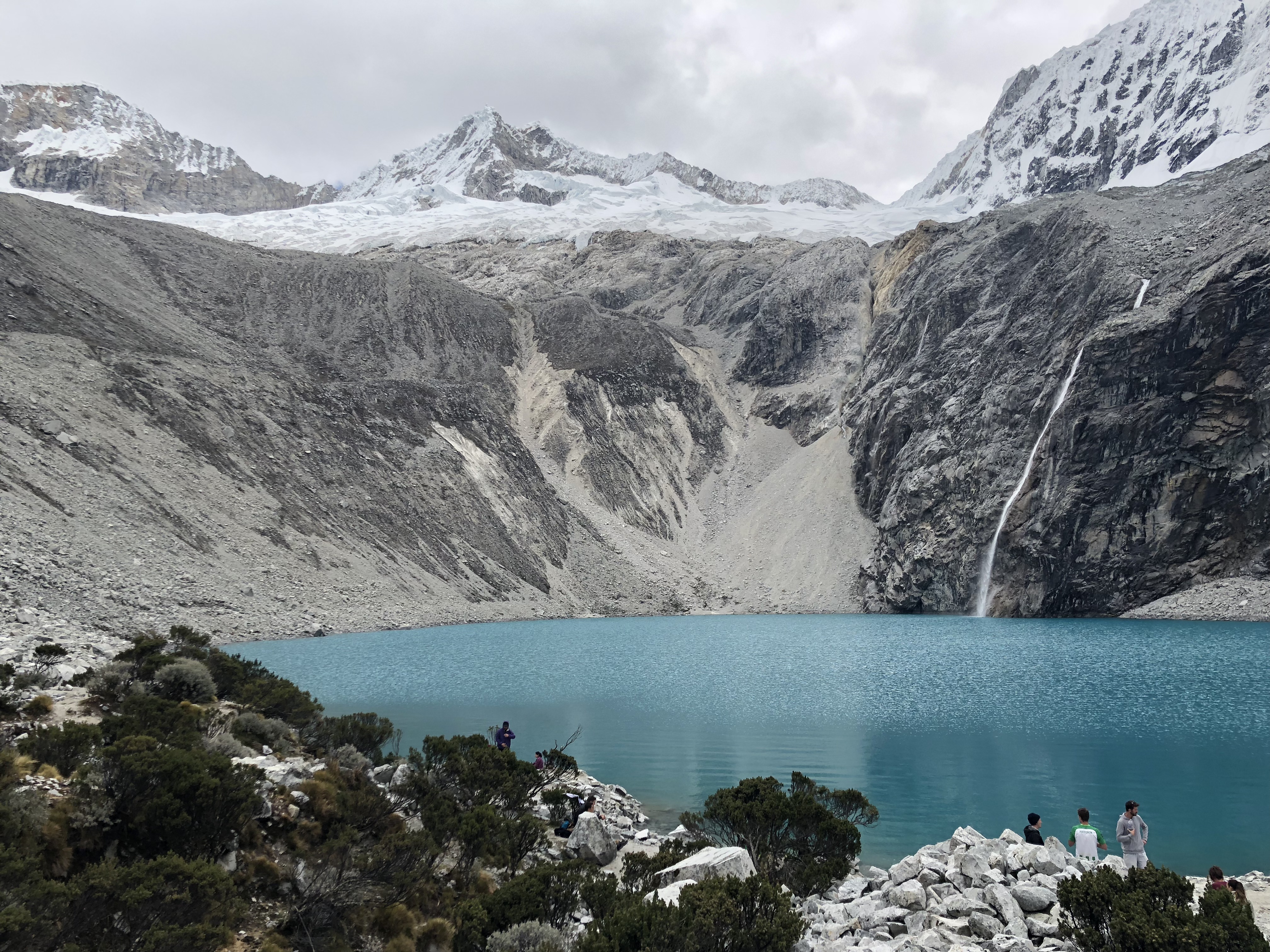
Huaraz was my next destination to do the infamous Santa Cruz Trek. Acclimatizing was going to be important as I knew the highest point I’d be reaching in the four day trek was going to be 4,750m, a few hundred meters shy of what the highest point I reached back in Ecuador was. To avoid any possible altitude sickness, I decided to do an acclimatization day hike two days before to Laguna 69, a stunning turquoise lagoon that sits at about 4,609m. Laguna 69 was the bluest water I had ever seen up at that point. Though it took almost three hours from the trailhead to the lagoon, the last one and a half hours were a very slow, one foot in front of the other, kind of pace. Every few seconds people were stopping to catch their breath, me definitely included. It was the kind of pace where one would catch up and pass a group of people they saw ahead, but just seconds later they’d catch up and pass you, all from the frequent stops we were all doing. It was a beautiful lagoon with its glacier water that helps give it its color. A definite prep to the days ahead.
Santa Cruz was a trek I had been looking forward to doing ever since I decided to travel down south from Colombia. It was on my radar because of all the great things I had heard through friends and blogs. So though I was looking forward to it, I was in no way looking forward to the weather that was expected given Peru had just started its wet season. My biggest concern was having enough to cover me and keep me warm at night. I truly DREAD the cold. But with confirmation from the those organizing the tour that things would be fine and I wouldn’t freeze to death, I left with more ease on the trek. There were eight trekkers in the group, in addition to our guide, cook and mule driver. I was so excited that I’d be doing this trek with familiar faces: Vincent, who I met back in Ecuador and Adriana, who I had met in the hostel just a few days before. The Santa Cruz trek was filled with different feelings and emotions throughout our four days. Day one gave us rain the entire day and into the night. We unfortunately had very wet tents because of it and slept through one of the coldest nights I’ve ever had. I truly thought I may catch hypothermia.
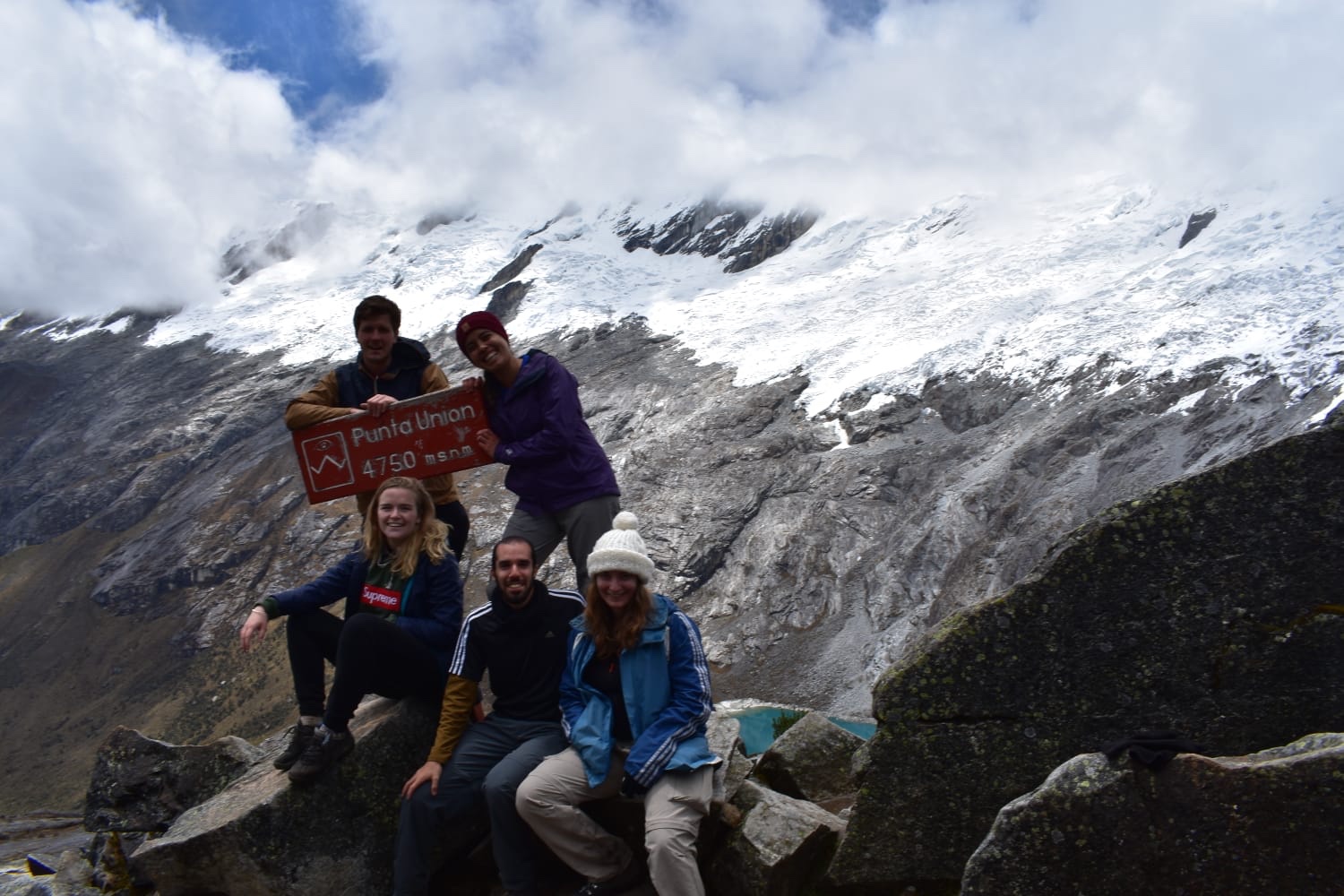
Day two proved to be the most difficult day of trekking. That was where we reached the Punta Union pass, the highest part of our entire trek at 4,750m. The majority of this day’s trekking I spent alone due to the fact that we had faster walkers that included Vincent and Adriana and those who were slower from feeling extremely ill due to altitude sickness. I was smack in the middle of those two groups. There was a time where I was feeling fatigued and wanted it to be over that I started playing the song, “Joyful Joyful” in my head from the movie Sister Act 2. I remembered the time my sister Karla and I were taking a walk around a neighborhood in Anaheim and we started listening to the song as we both sang and danced to it. We both love to sing though only one of us has the talent for it (not me). So, I did just that. I sang and danced to it alone in the rain as I continued in the path, just for a few minutes. It lifted up my spirits, and seeing as I was alone, it kept me entertained for a while until I got company again from those behind me. That night was also the first time experiencing shortness of breath while sleeping. Both Adriana and I kept waking up in the middle of the night gasping and trying to catch our breath because of the altitude. It was very scary. The feeling of gasping for air even through breathing exercises, in the middle of the night, while half asleep, in the cold dark, made me feel helpless.

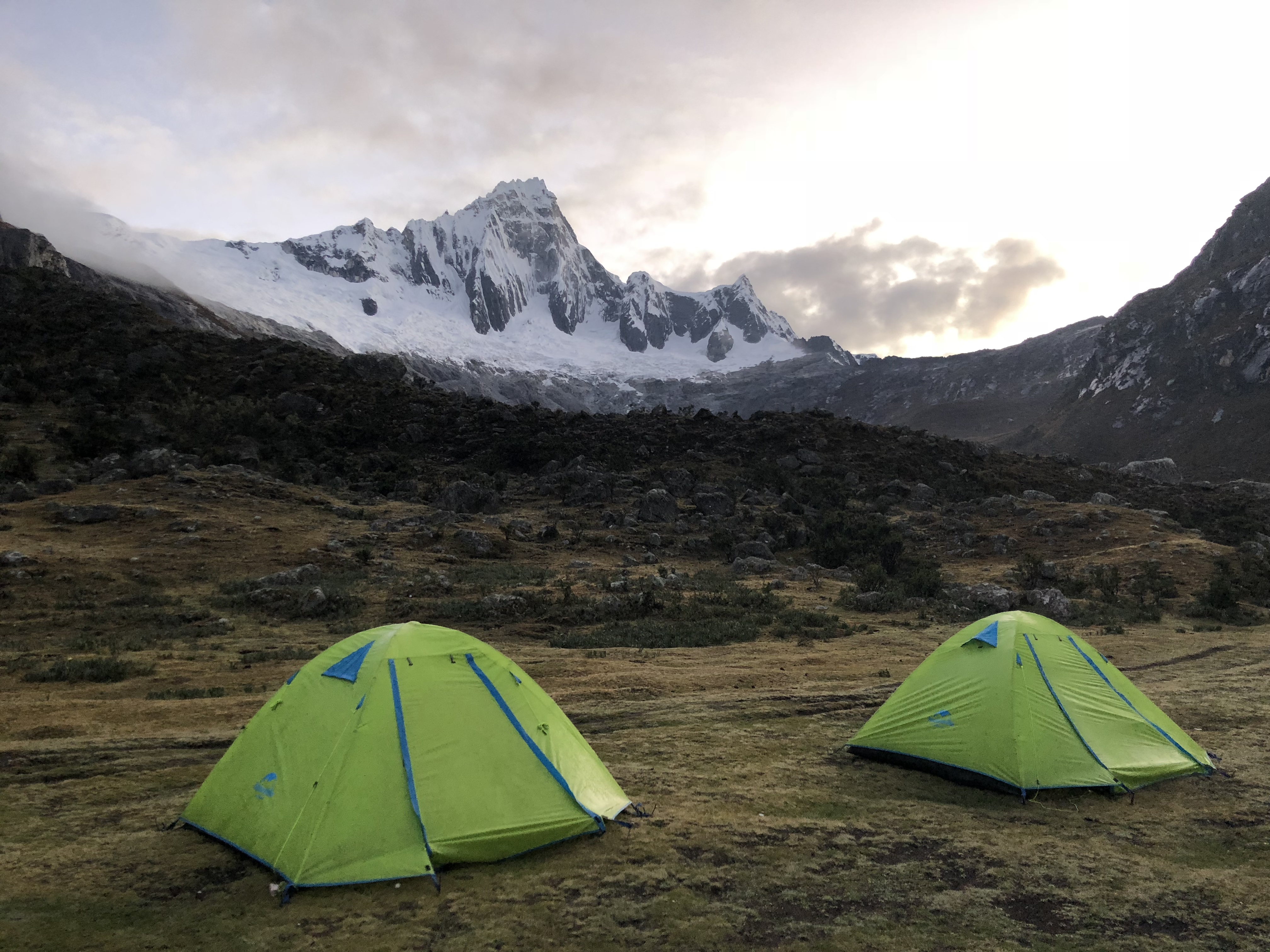
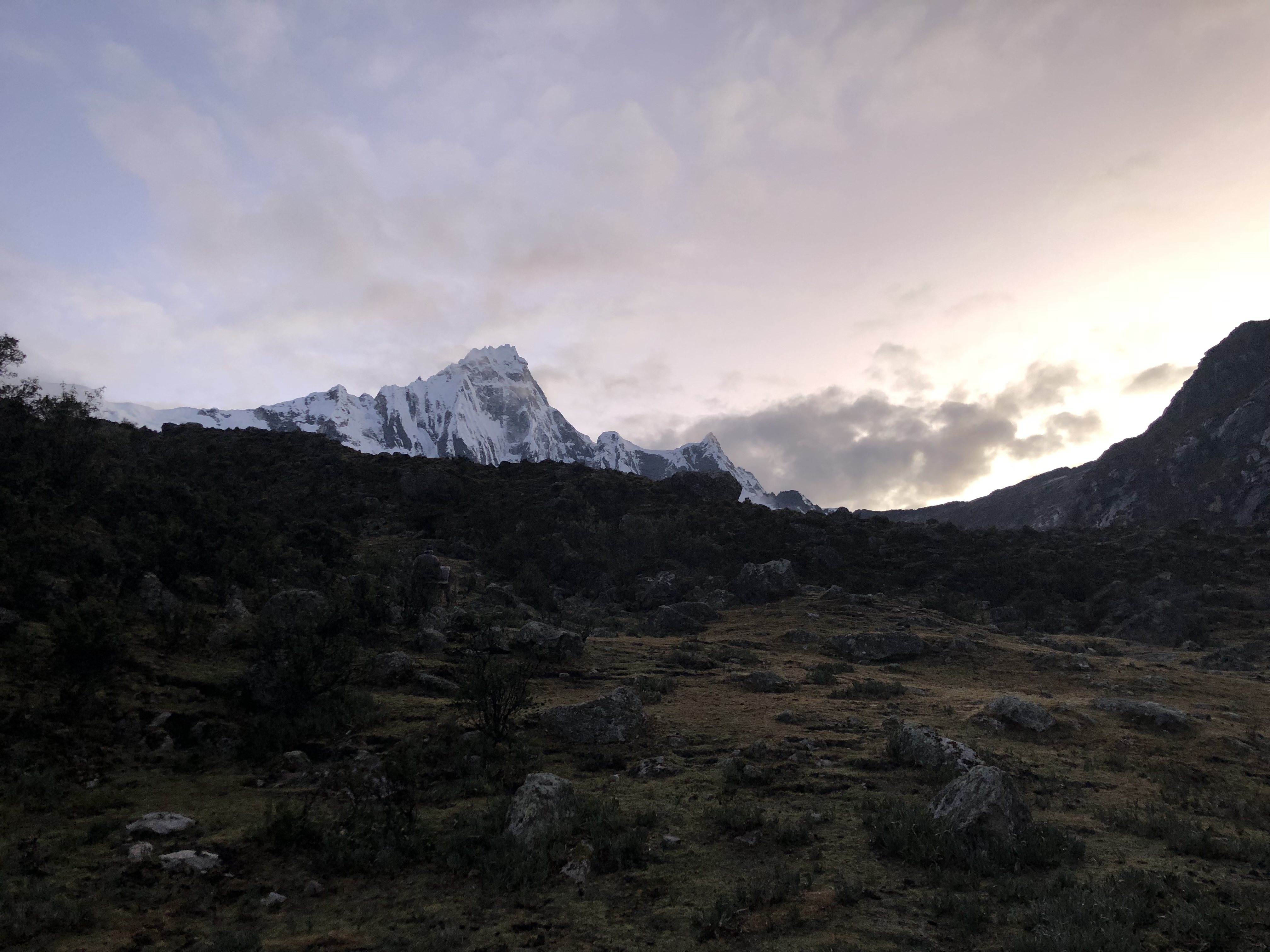
Day three brought us more desirable weather and it was also the day that half our crew had to end the trek one day early. Two of them had previous plans to end early due to prior engagements and the other two chose to end it early because of the extreme difficulty they were having with the altitude. We each took separate routes as we parted ways but planned to have a final celebration drink with pisco sours, back in Huaraz.
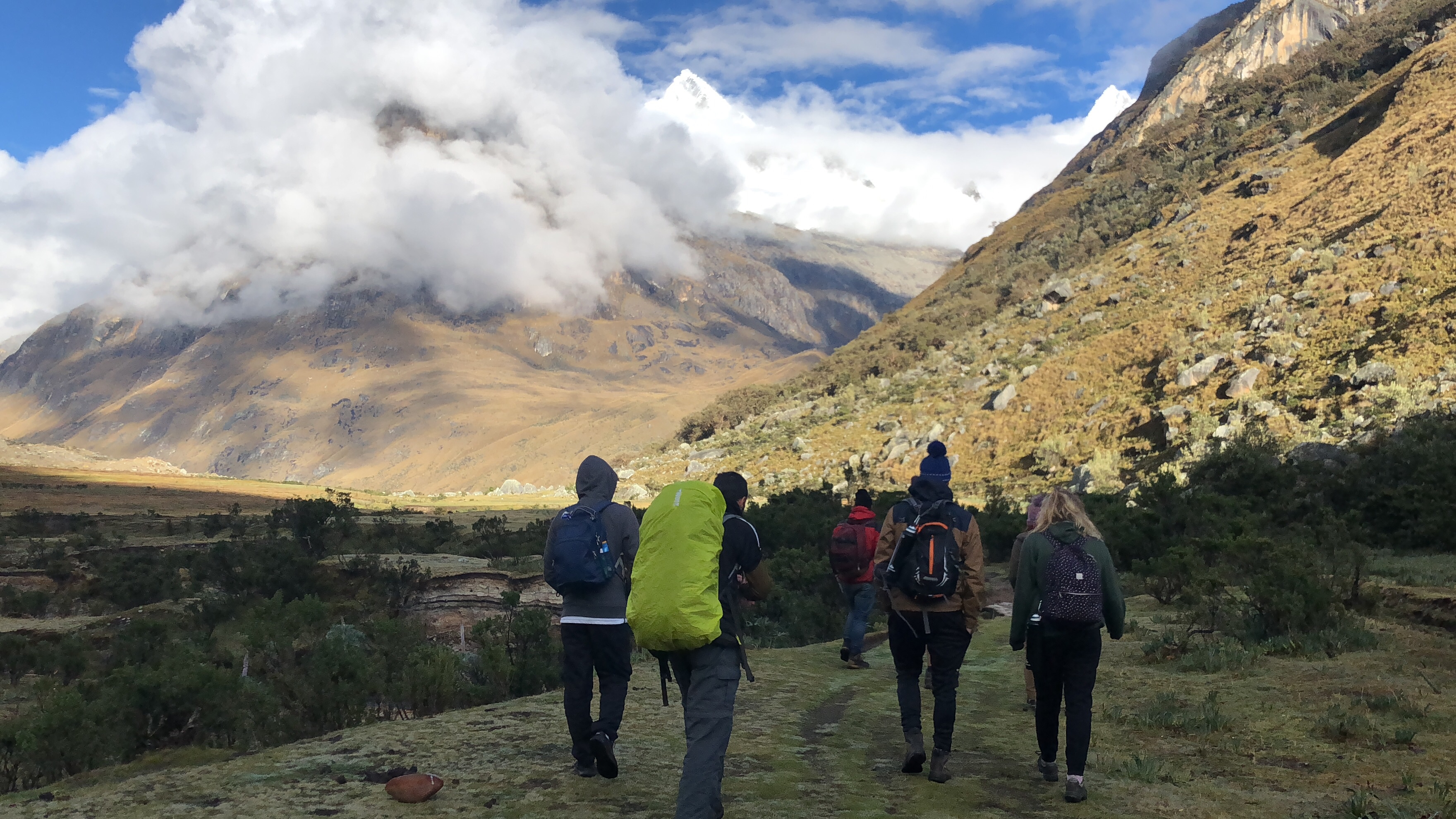

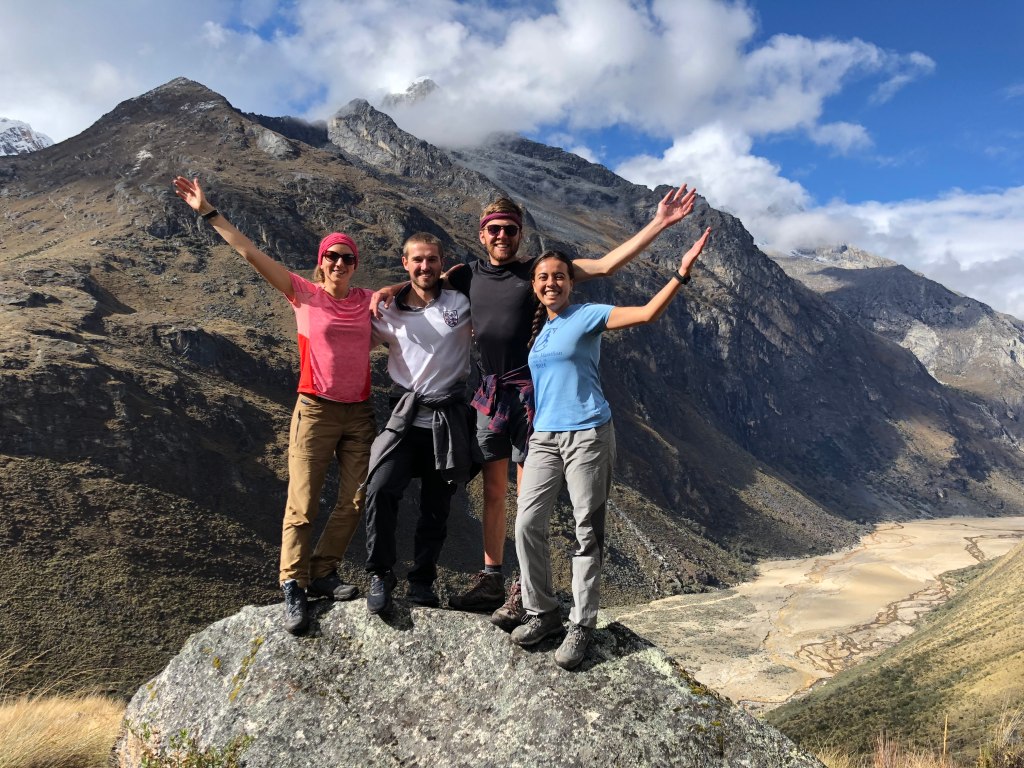
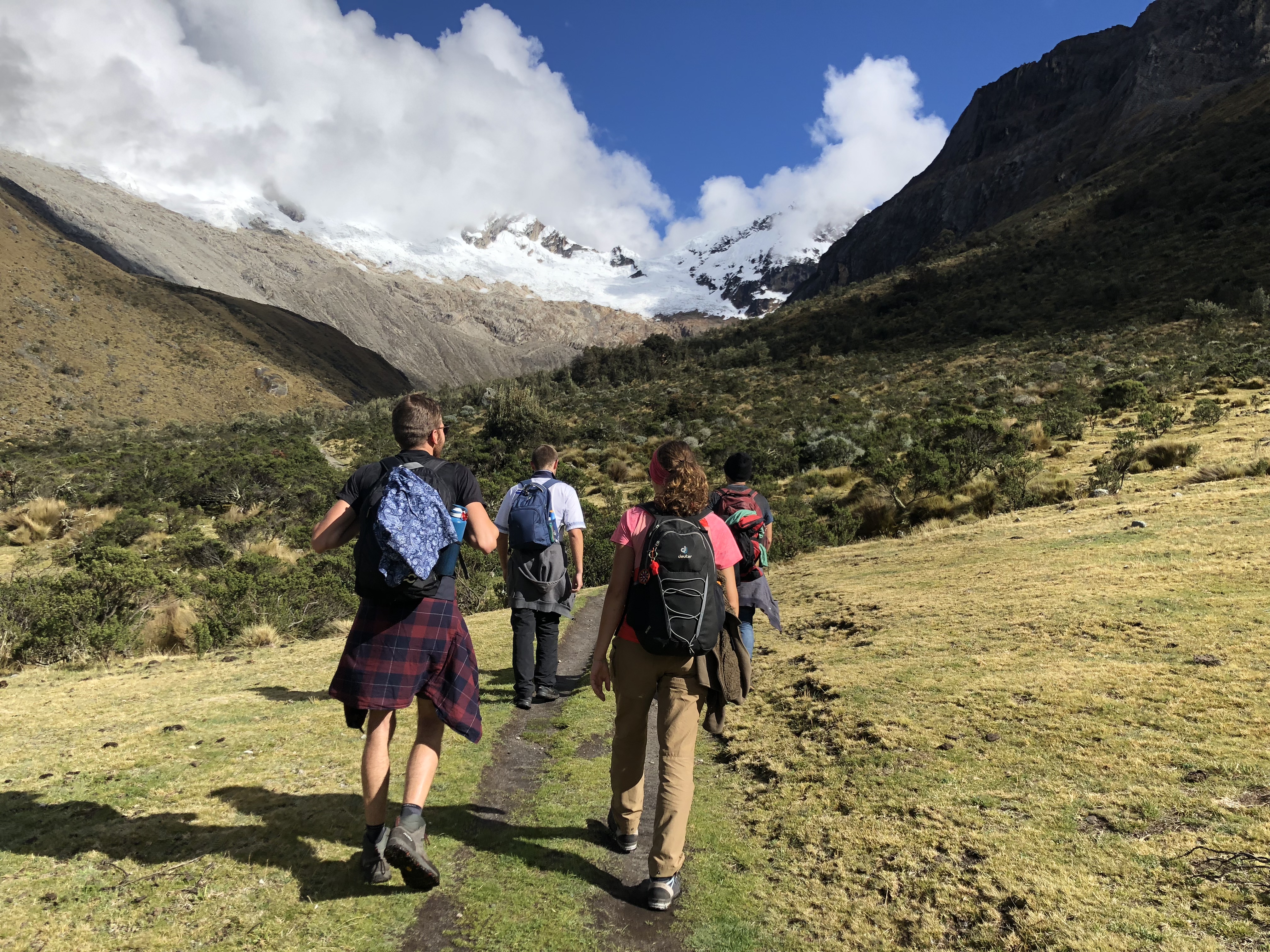

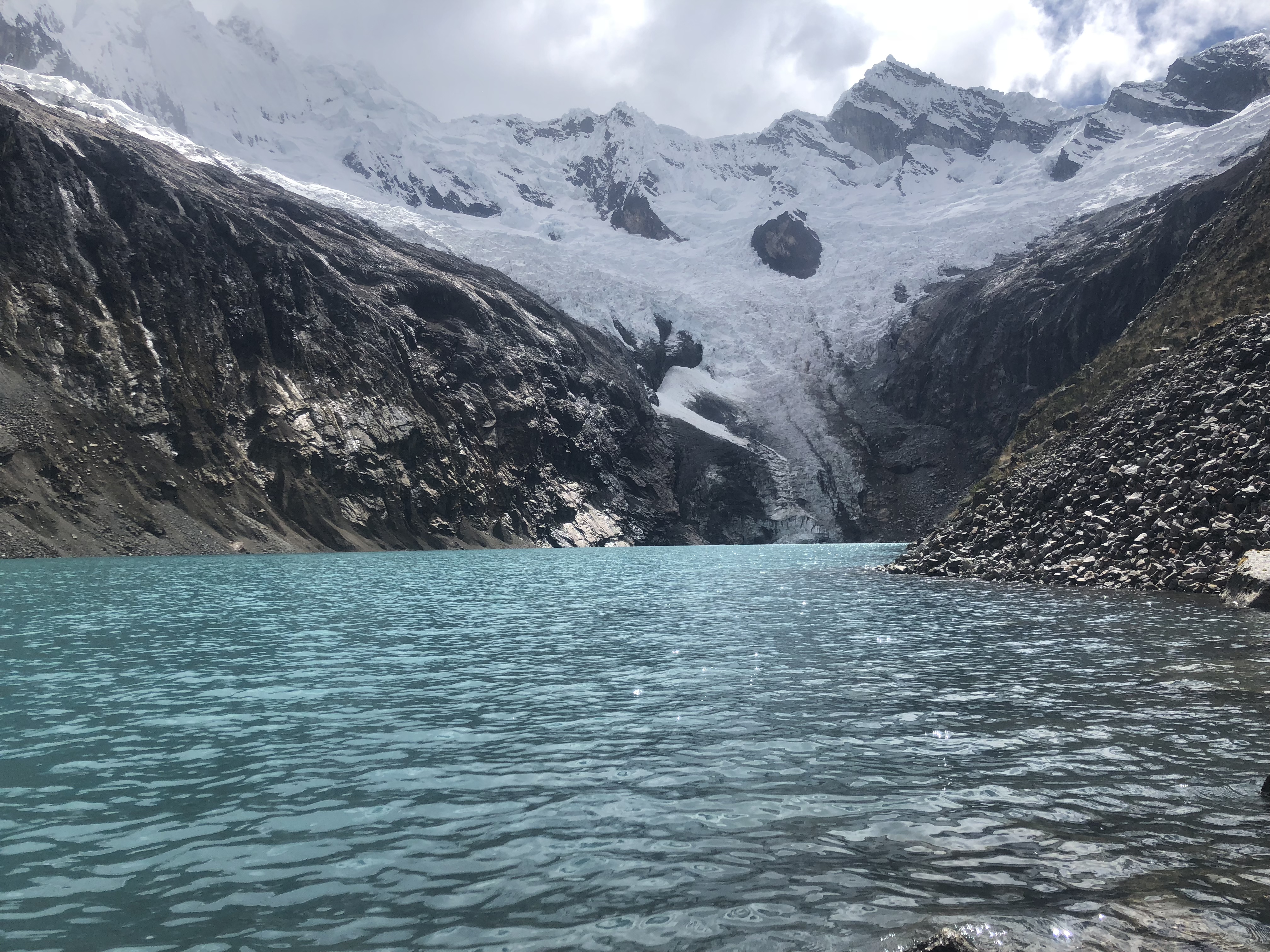
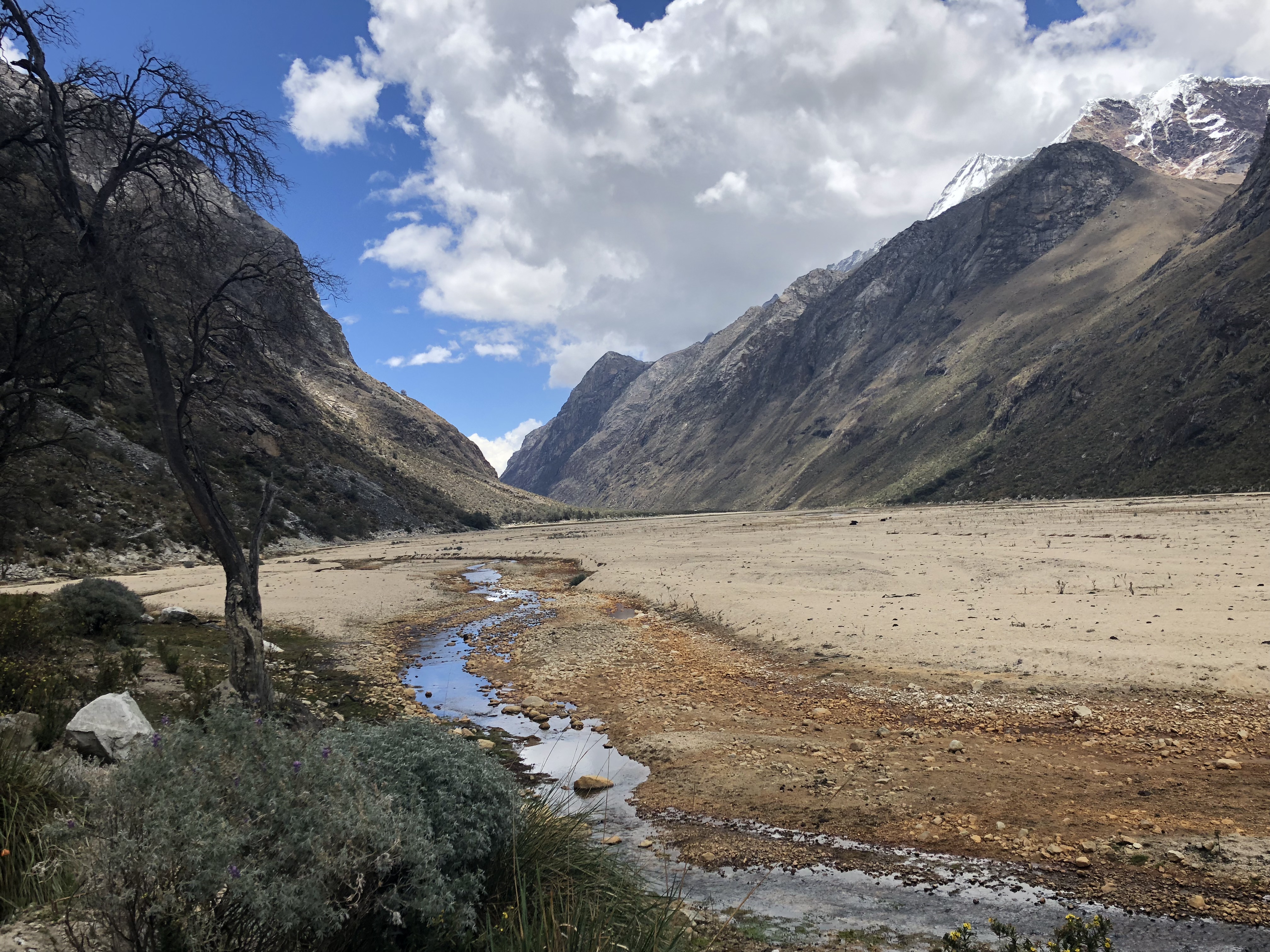
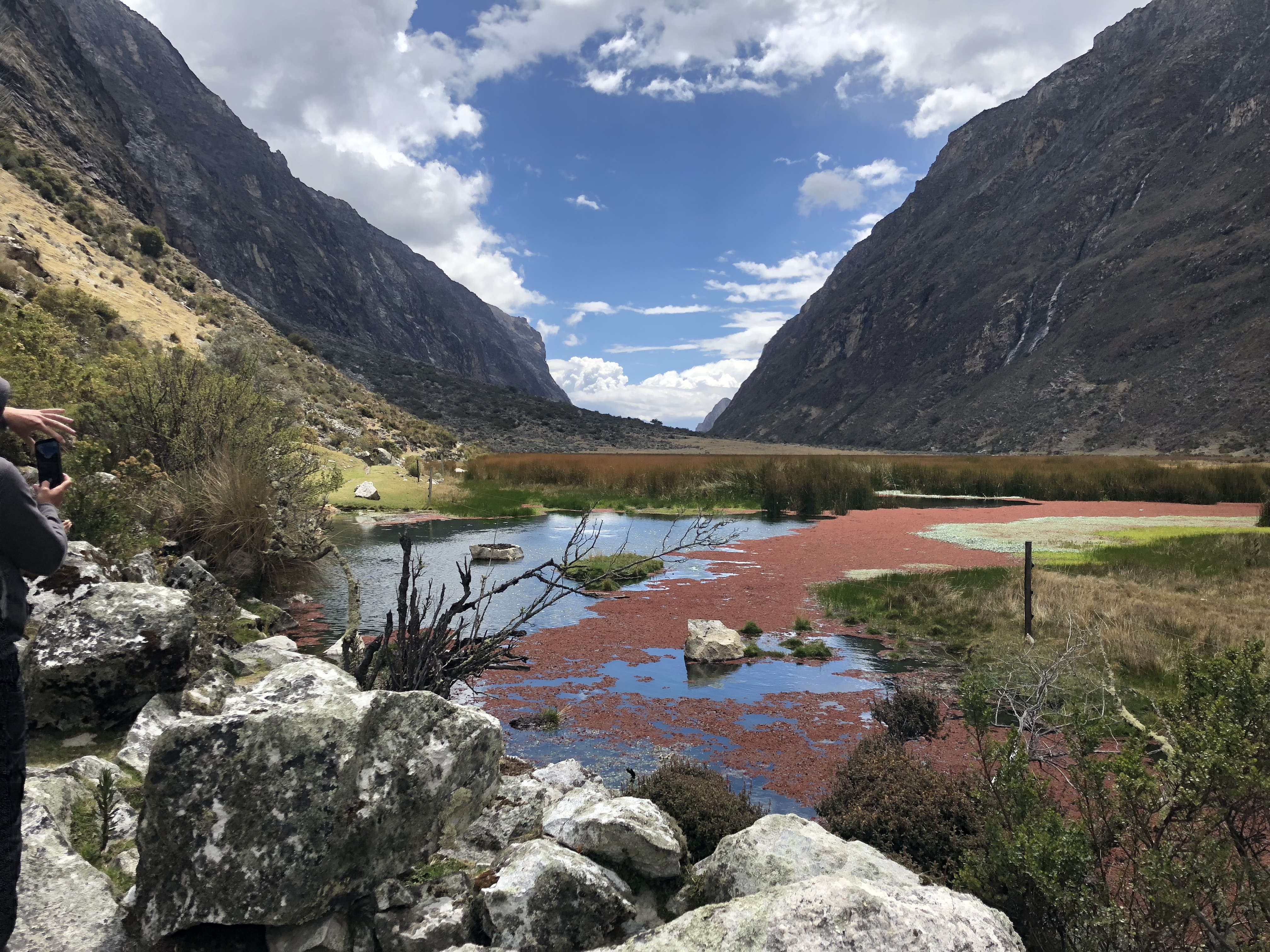
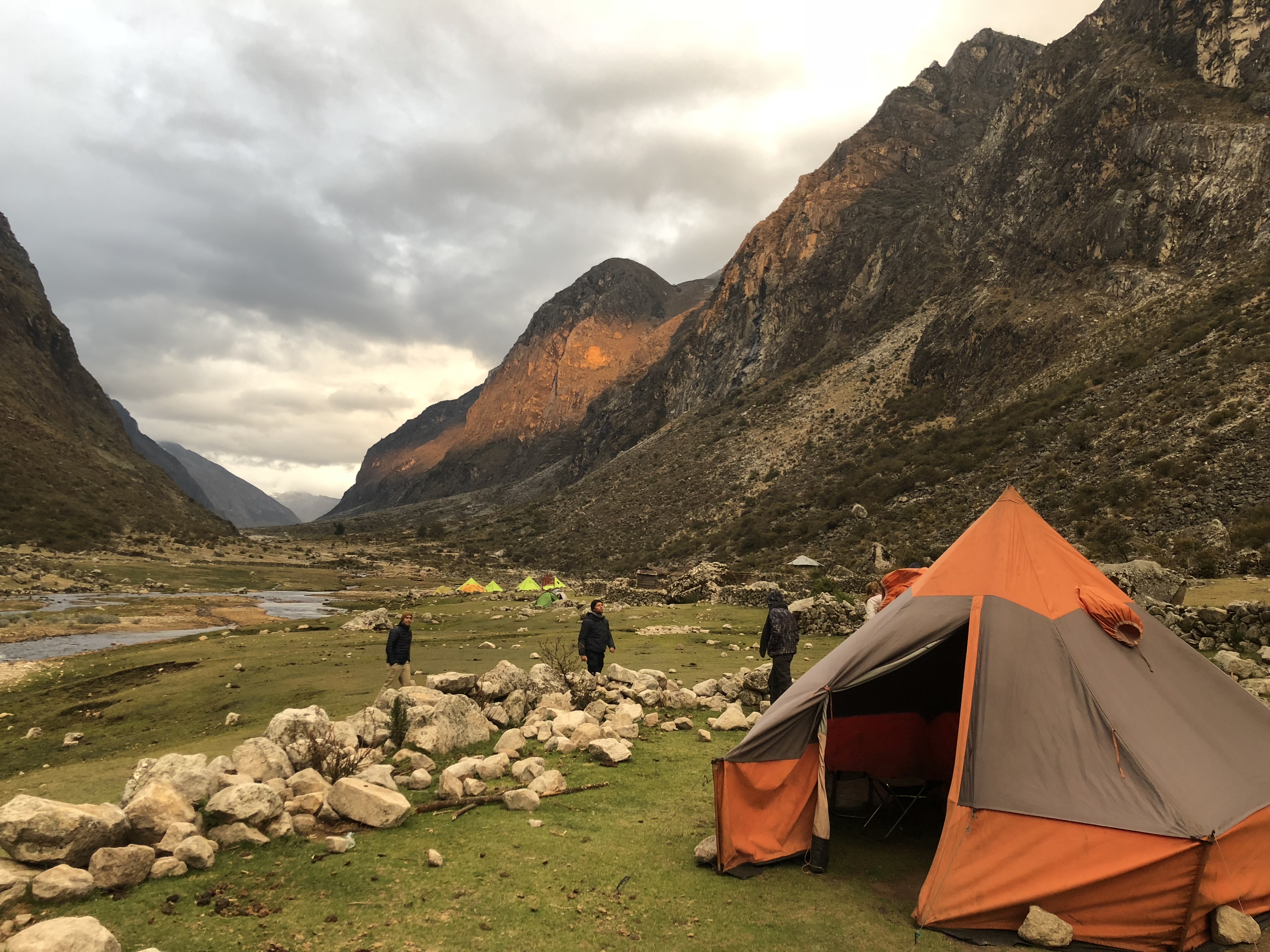
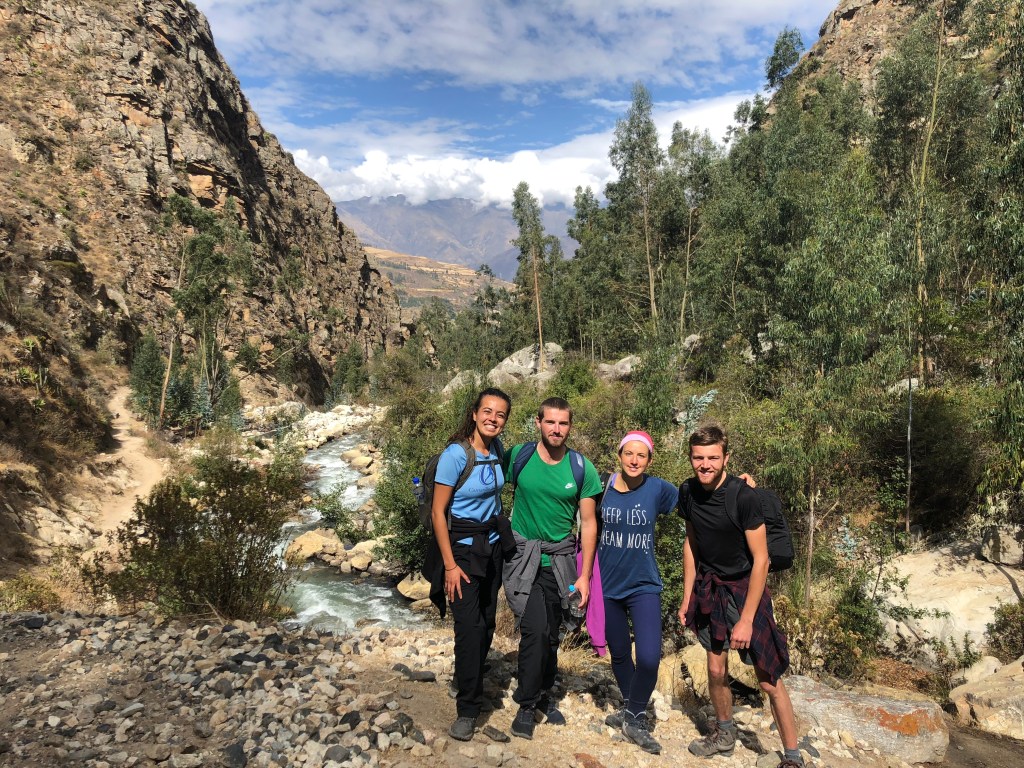
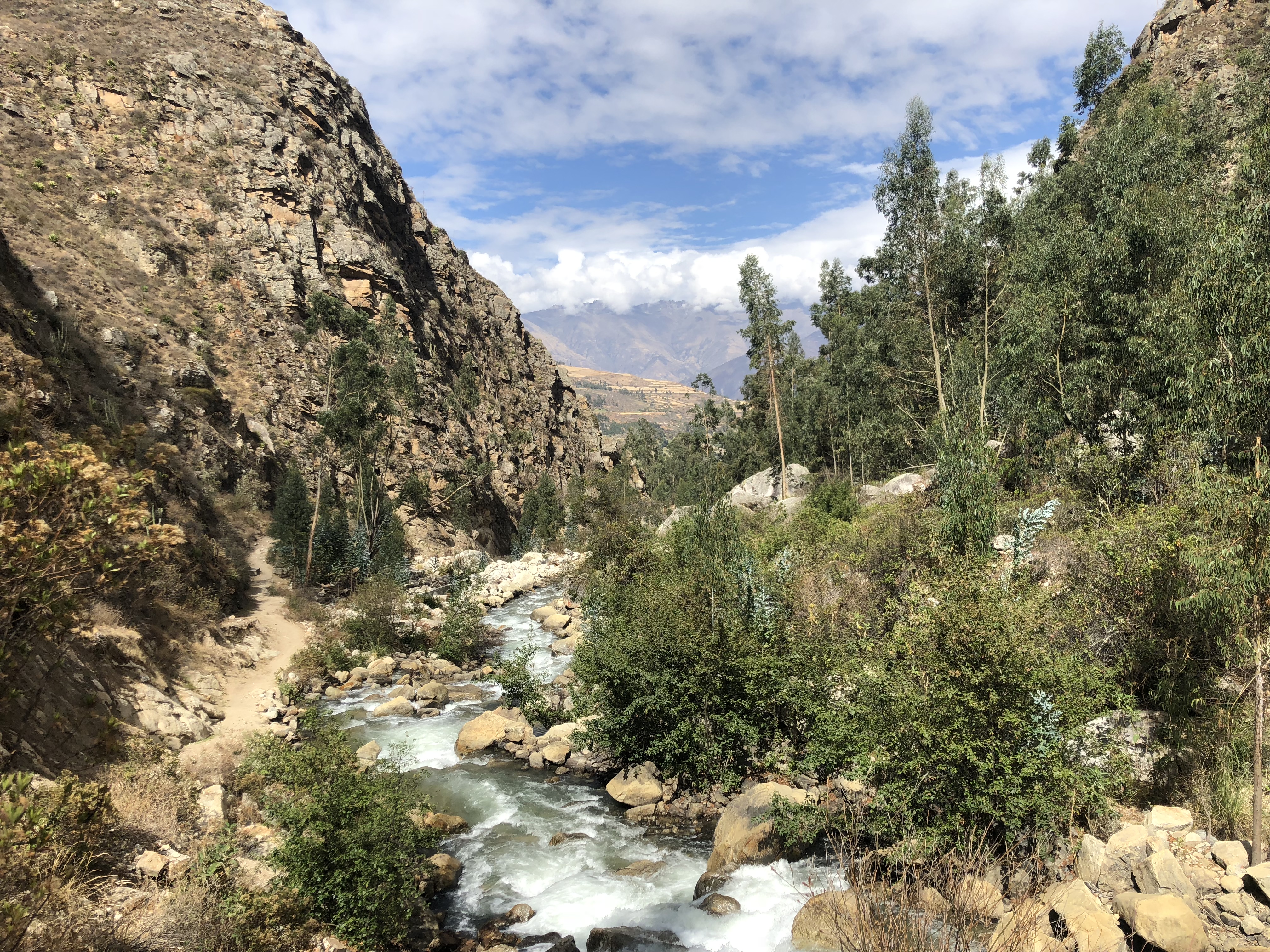
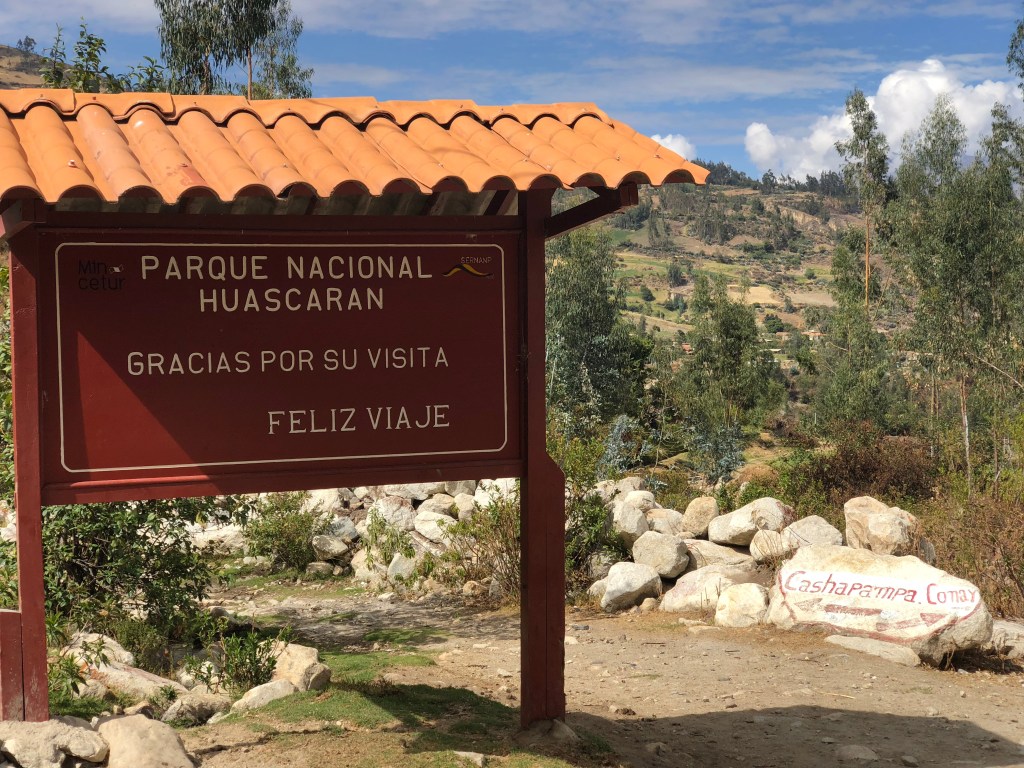
Day four was the loveliest of days (weather wise) and also our final day. It was a short three-hour morning hike out of the national park where we arrived back in Huaraz by the afternoon. That night Adriana, Vincent and I headed out of our hostel to meet up with the rest of the group at a restaurant and to have our celebratory pisco sours. Only one block out I took a wrong step on the sidewalk and twisted my ankle. Out of the four previous days of trekking over slippery rocks, muddy trails, questionable routes regarding safety, not once did I injure myself. Yet, walking out of the hostel on a paved path and taking the wrong step proved to be enough for myself to sprain my ankle. The one thing I was trying to avoid for my entire travels happened: I got injured. It was such a frustrating feeling. Luckily, I had Adriana and Vincent who catered to my needs right away and helped me get back to the hostel ASAP and begin with the R.I.C.E. method to help with the sprain. If it wasn’t for them, I am most certain that night would have been much more difficult for me on an emotional and physical level. I felt like a princess that night with the attention and care they gave me. Vincent carried me all the way up to our second floor dorm, Adriana quickly searched what needs to be done when someone sprains their ankle, I received medicine, food, a book and headlight to keep me entertained, and was helped to be changed into my pajamas (as I was not going to be going out for those pisco sours anymore). Idk if it was because of my immense feeling of vulnerability at that moment of spraining my ankle, particularly because I am thousands of miles away from family and my comforts but recalling that time of receiving such kind and selfless care is something that has been engrained in my mind and will remain from here on out. I am forever grateful to Adriana and Vincent for helping me out so wonderfully and compassionately during my time of need. Backtracking slightly to the Santa Cruz trek, that experience was one that I am more grateful for now than I was at the moment of experiencing it. I remember thinking my first night sleeping in that freezing cold wet tent and beginning to regret choosing to go on this trek knowing the weather was not going to be what I’d deem as acceptable and pleasant. However, that experience is one of the fondest ones I have of all of Peru. And it gave me some of the most beautiful sites from the entire country as well. Challenges, setbacks and frustrations really can turn out to be moments of learning, connection and appreciation. I really am so grateful that things happened the way they did and sometimes it takes some time to see that rather than at the moment that they occur.


Huacachina
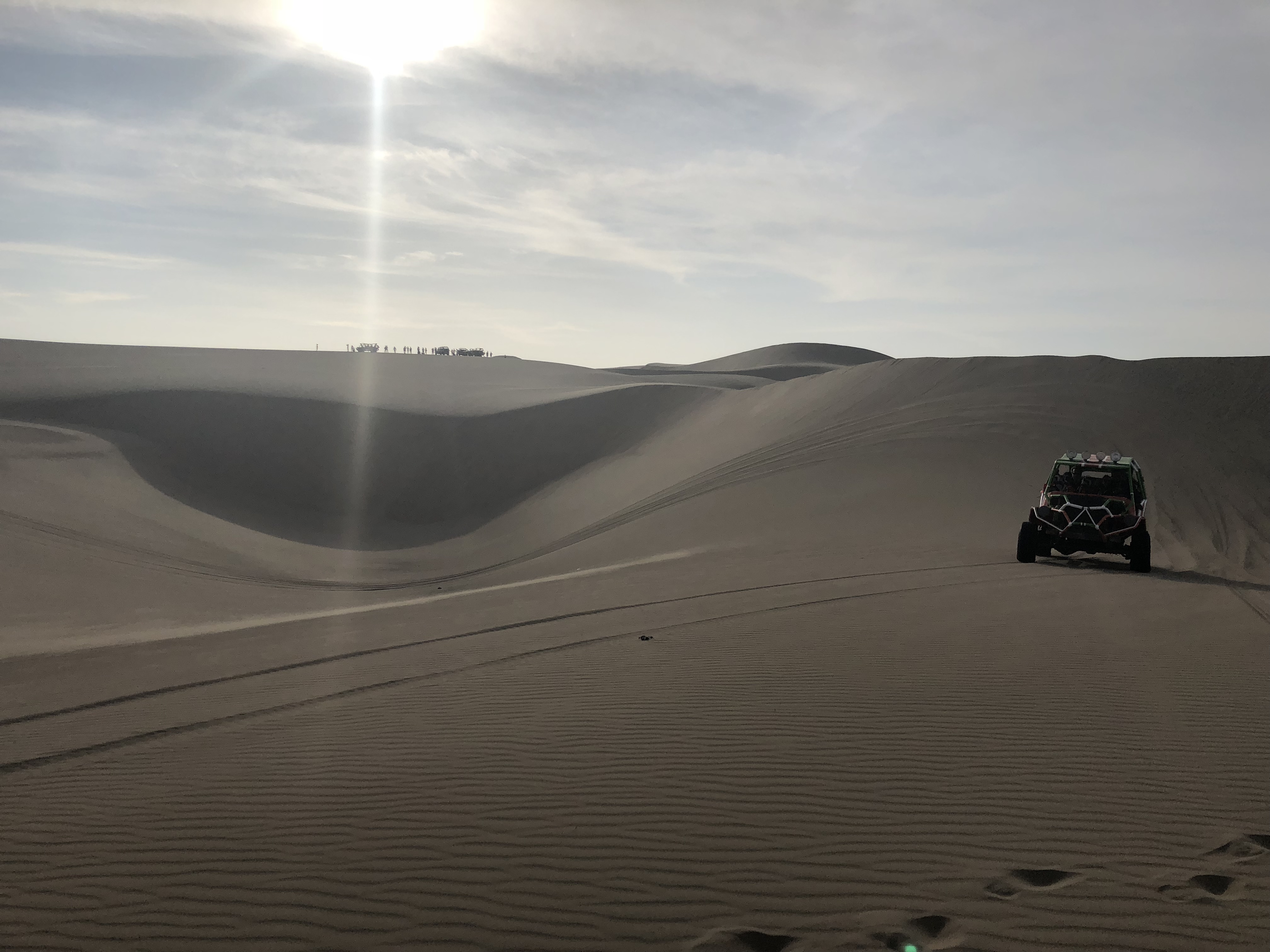
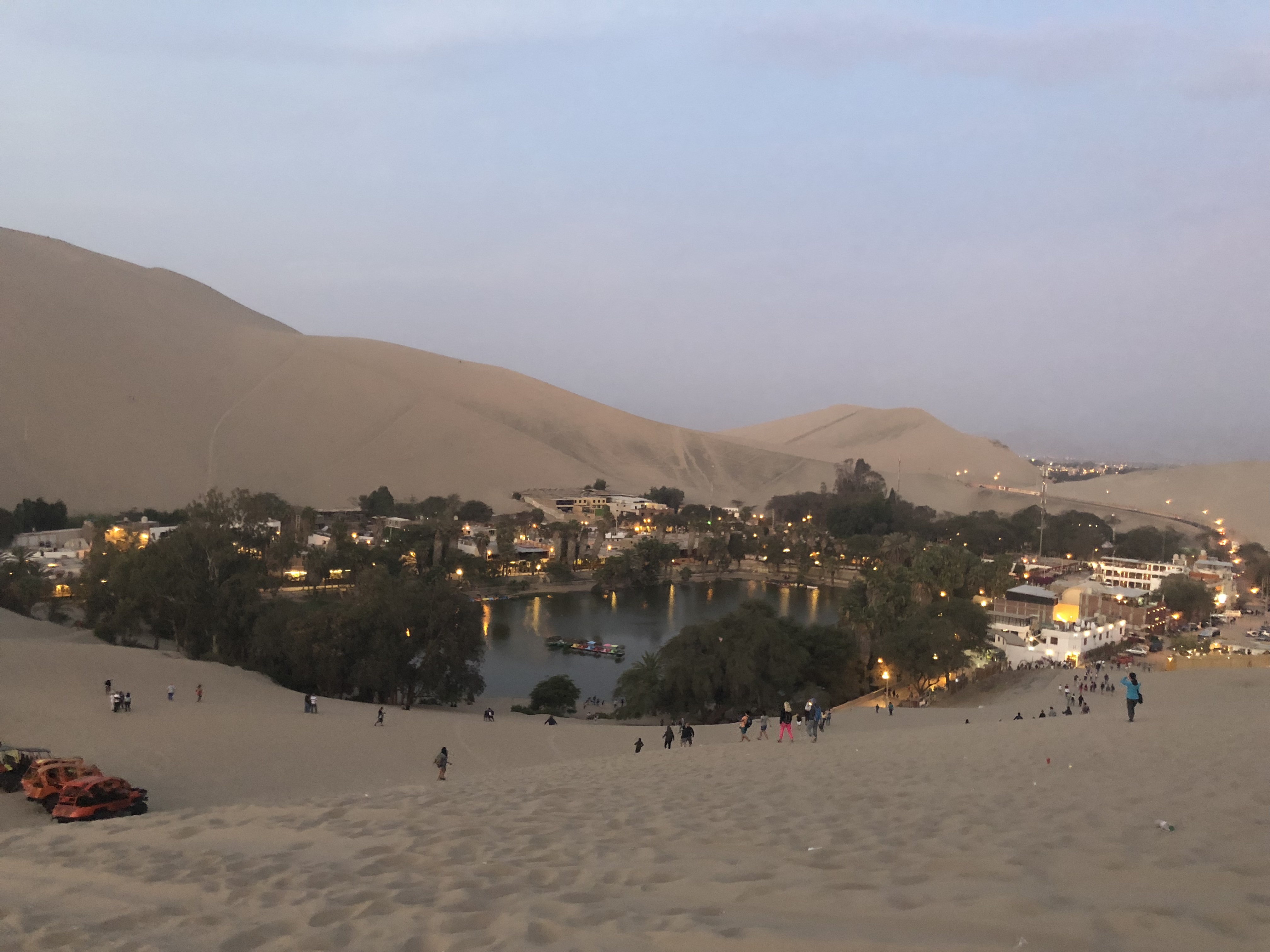
I headed to Huacachina, about 11 hours south of Huaraz, to visit the sand dunes, go dune buggying, and watch others go sand boarding (since I wasn’t going to be participating due to my ankle). Sarah and I went together on an overnight trip and stayed in an eco-hostel that felt more like a day resort. There, I also got to meet up and see Adriana. Dune buggying was such a thrilling experience. It gave me genuine feels of being on a rollercoaster all while having scratchy sand blown into my face and hair. The sunset here was spectacular with bright orange colors spread throughout.


Lima
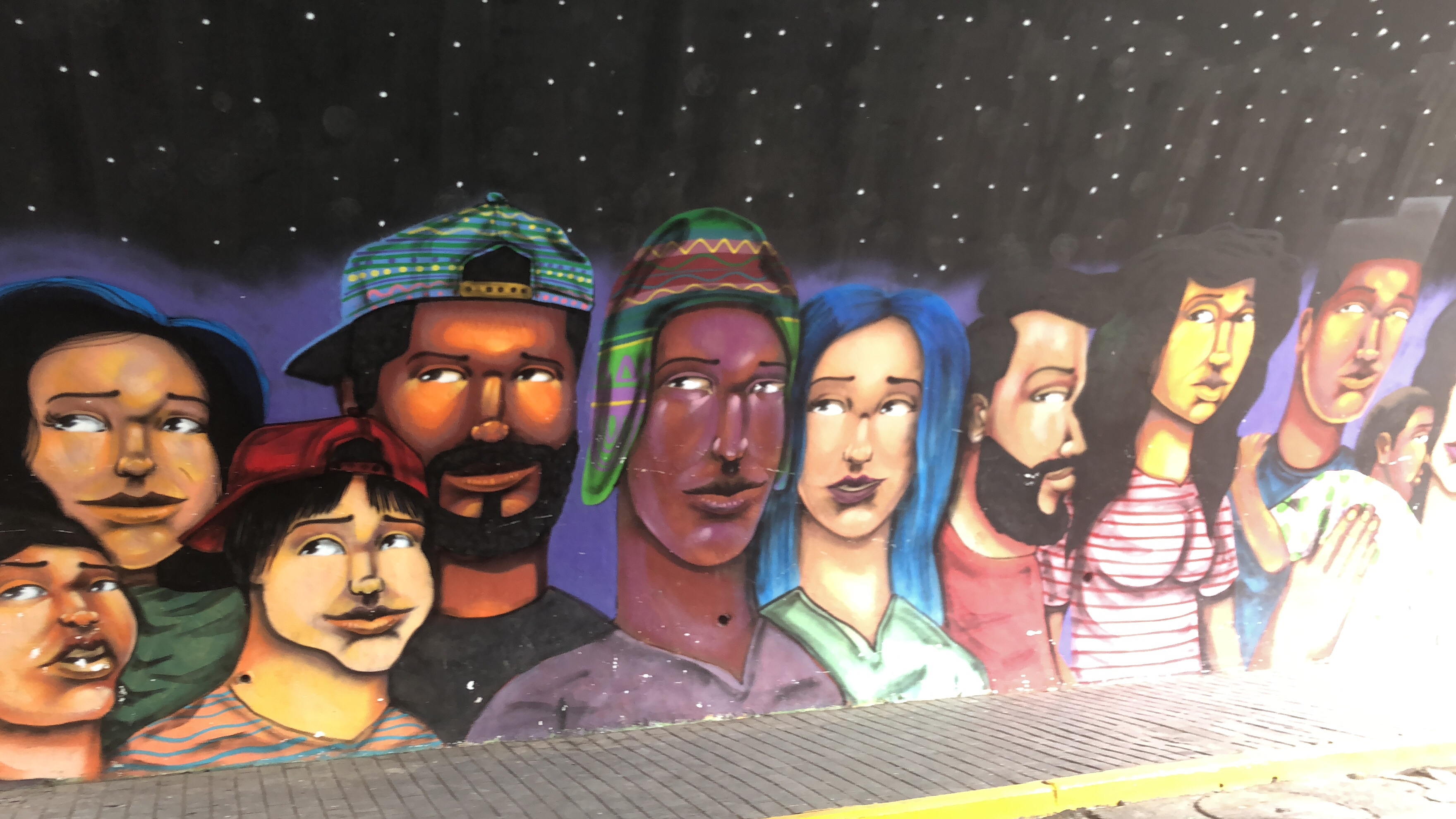
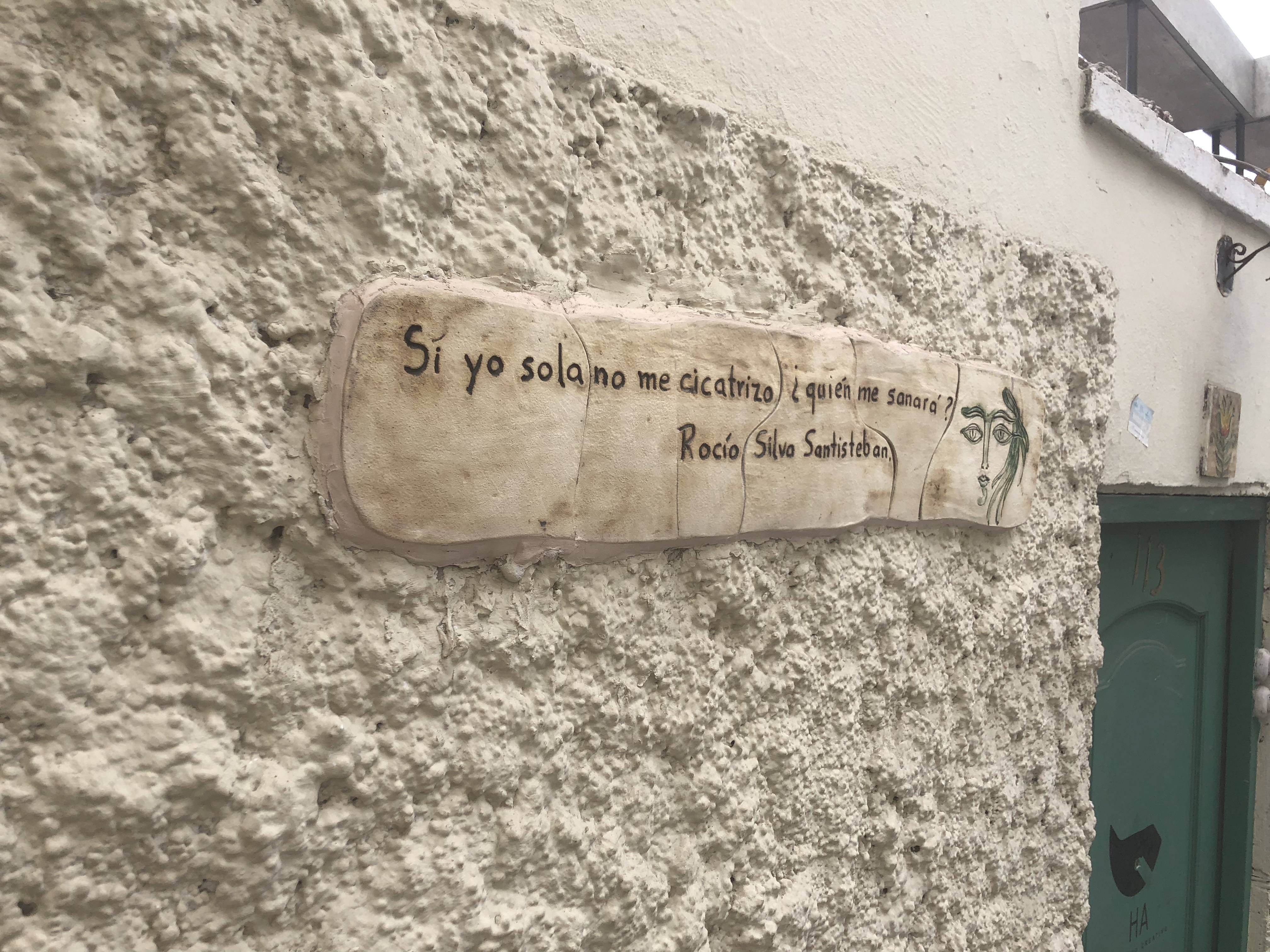
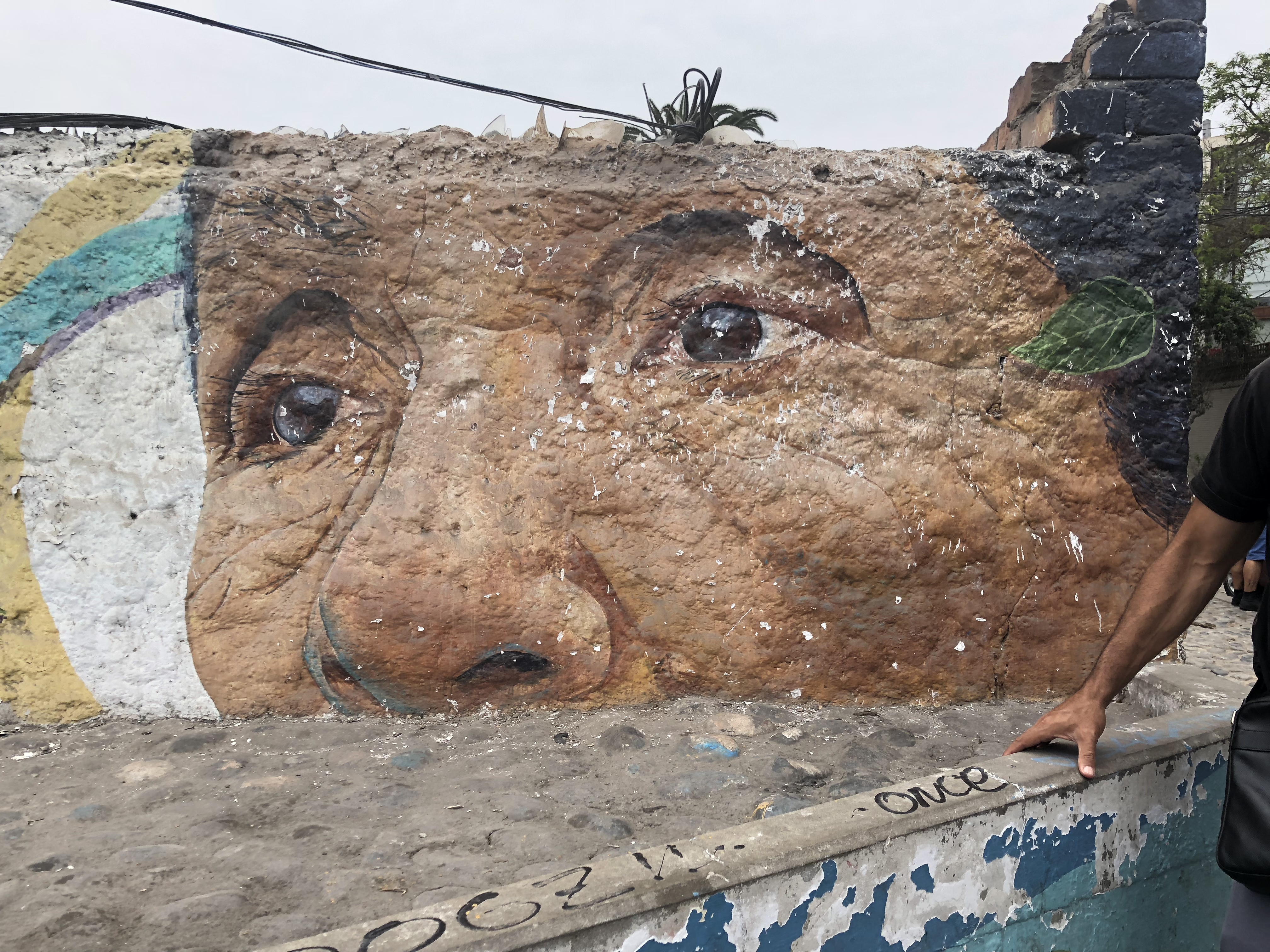
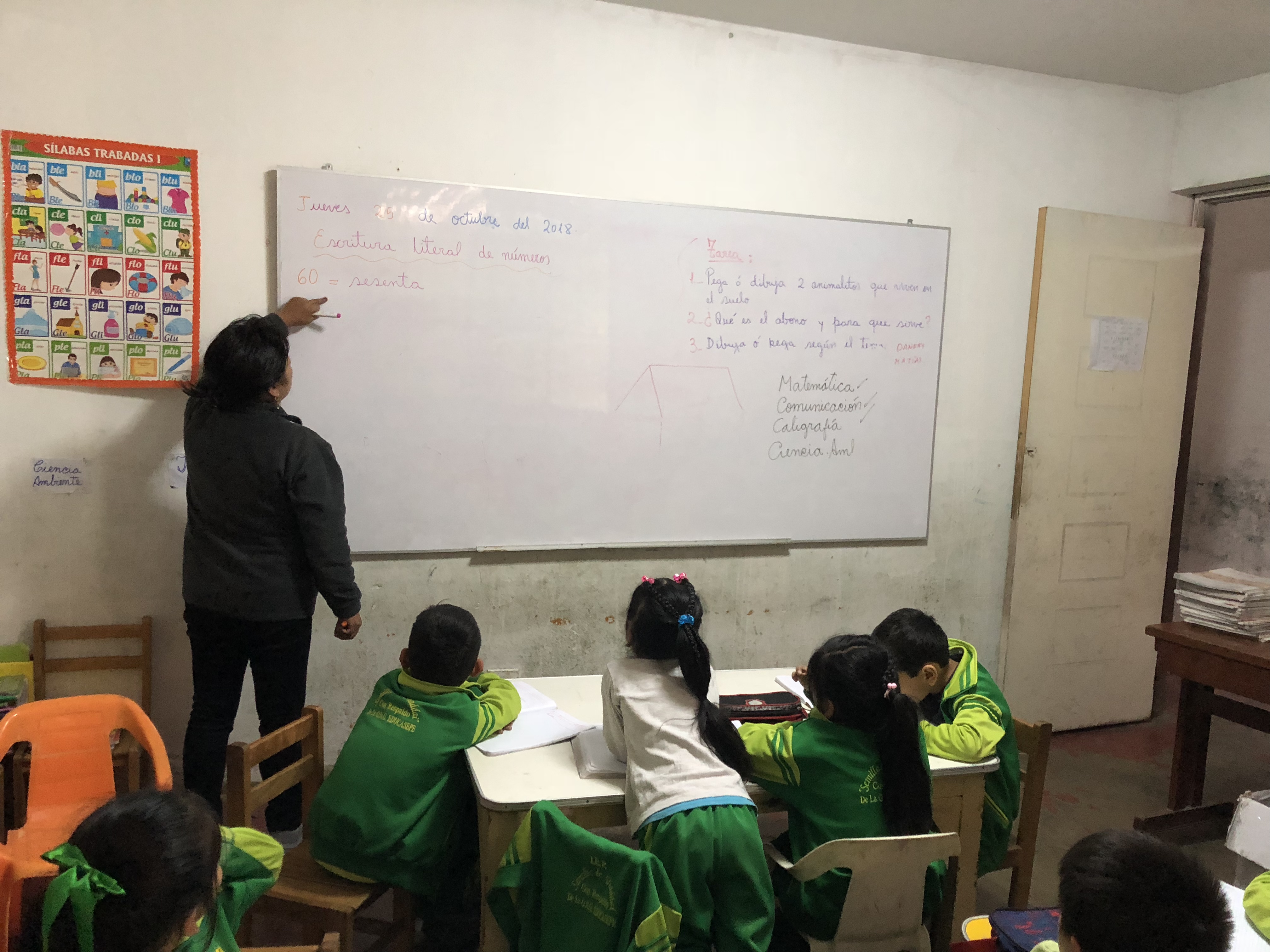
As I’m coming to see more and more, big cities are not the most exciting places for me to go to, given the beauty that there is to be discovered in areas less traveled, which many times tend to be outside of metropolitan areas and in small towns. However, Lima was a city that didn’t disappoint. It reminded me tons of Los Angeles, with the busyness and traffic that is a part of everyday living. I quite enjoyed seeing the different neighborhoods and navigating my way around using their metro system. Lima is where I ate one of the best churros I’ve ever had, learned that the city pretty much has grey skies all year round, it almost never gets rain, and where I got a chance to volunteer at an elementary school for 5 days to do observations on teacher practices. While at Educación de Calidad para las Semillas del Perú (EDUCASAPE), it was eye-opening seeing different ways of implementing learning experiences to the children. The particular first grade class I observed during my time there showed me the students don’t receive lessons. Rather, they do a lot of monotonous work of copying what is written on the board with an absence in discourse. I asked the school director how many lessons students receive a day and when we talked about my observations, she shared with me that she knows her school is struggling with instruction at the moment. She shared how she wants rich lessons delivered with strong student discourse, but that teacher training is difficult given the funds available. Because of that, she asked if I could deliver a training to her teachers on the structure of a lesson. With nerves on leading my first teacher training, and in Spanish, I agreed and created a PowerPoint to guide me through it. It felt successful. I felt some apprehensions with thinking maybe teachers would feel resistance since I had just recently arrived and hadn’t established a strong relationship with them. Luckily, those were not the attitudes projected out to me during the training and many teachers seemed enthusiastic about what I presented. I did gain a deeper sense of appreciation for the plethora of trainings I’d received back in Los Angeles and the resources provided to me that has helped enhance my teaching. I’m hoping to continue gaining a deeper understanding within myself of expectations and supports I need in the teaching profession. From my personal experience, teaching is one of the most rewarding and difficult jobs I’ve ever undertaken.
Paracas
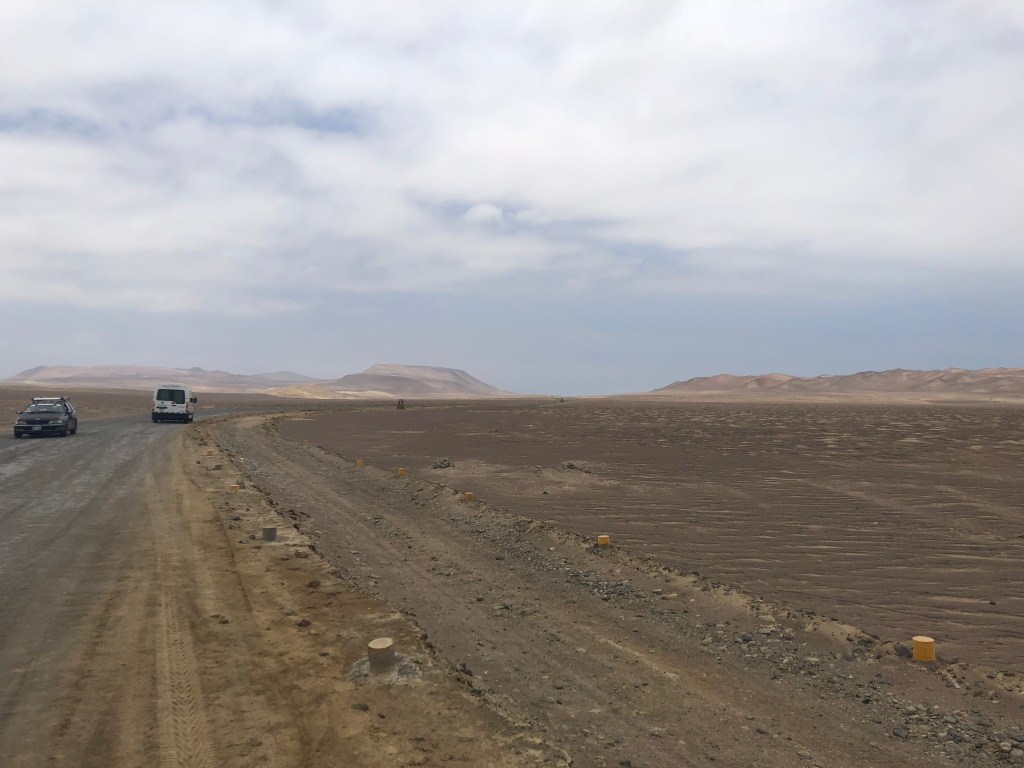
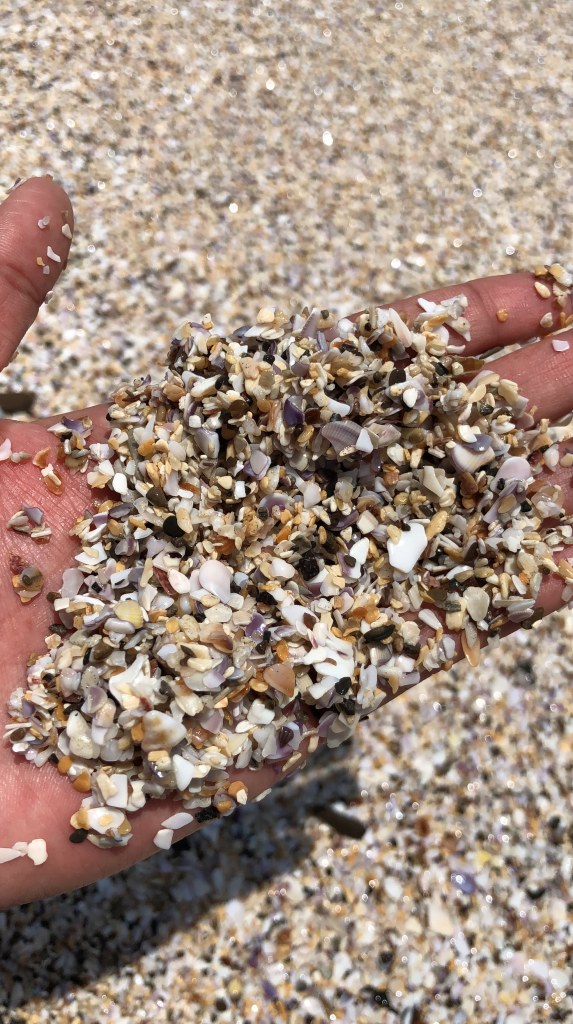
From Lima, I headed to Paracas for a quick two-day trip to visit Paracas Natural Reserve and Islas Ballestas. I met Gonzalo, from Spain, who was visiting a few countries in South America on a quick three-week vacation. As we were both traveling alone, we stuck by each other and got to see plenty of marine wildlife during our time around the Islas and at the reserve. There were dolphins that came right up to our boat and sea lions in abundance on the islands. We also got a chance to see penguins! It was a quick stop but enjoyable, nonetheless.
Arequipa
After leaving Paracas, I headed to Arequipa to explore the city (by some sources seen as the most beautiful in Peru) and use that as my home base while I attempt to do a two-day trek through Colca Canyon. My plans did not turn out even close to what I was expecting in Colca Canyon. This is where injury #2 occurred. Gonzalo and I decided to meet up to complete this two-day trek. During day one of trekking three hours down into the base of the canyon, I put immense pressure on my knees where it caused my IT band to flare up and create agonizing pain every time I’d take a step. Luckily, the pain heightened more when I reached the base, where there was a hostel, as opposed to being in the middle of nowhere. Instead of continuing on the remaining five-hour hike, I chose to stay in the first hostel to rest for the night. Gonzalo continued on as planned. The next morning, I had to take a mule back up the canyon since I was not able to walk on my own without the pain reigniting. I felt so frustrated for getting injured AGAIN and not completing what I set out to do. However, the one-and-a-half-hour mule ride up the canyon was a nice early sunrise ride filled with feelings of surrender as people hiked up finishing their last leg of the canyon. Back in Arequipa, I stayed for a few extra days where I had one of the best museum experiences ever. Specifically, because I got to see “Juanita” in person. She is the Incan girl whose frozen body was discovered in the Andes in 1995. Her well-preserved body is now found in Arequipa. It was mind blowing learning about her, Incan culture, child sacrificing, and actually seeing her through the glass ice box that continues to keep her preserved. I wish I had pictures to show but photography was not allowed. Anyhow, the one-hour mandatory tour made it even better since our guide was so knowledgeable and organized on the information he gave.


Cusco
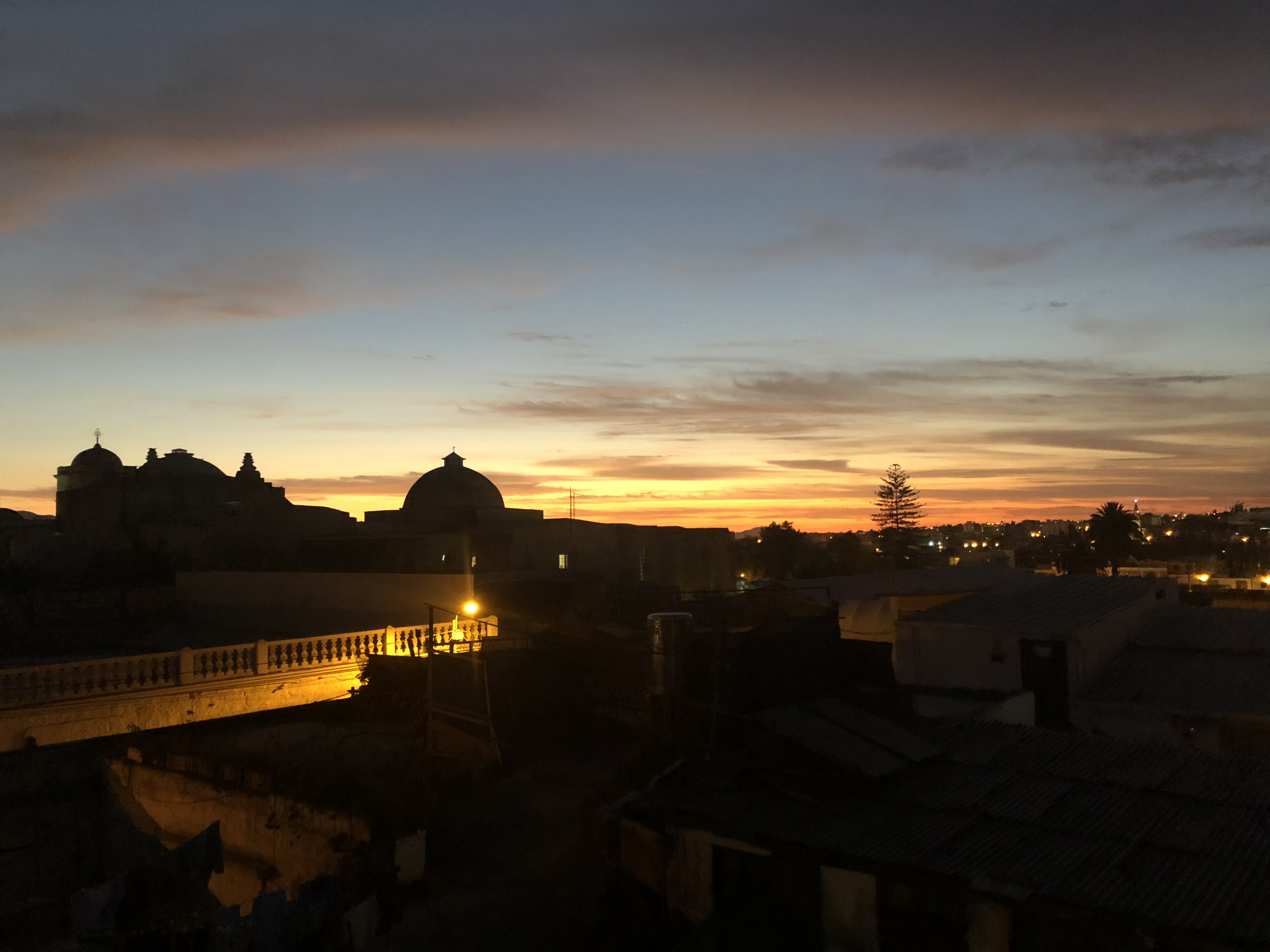
Cusco! Oh the time had finally come. One of the reasons I had been most excited to be in Peru was to visit Machu Picchu. Sarah and I headed over to Cusco from Arequipa in one of the most uncomfortable and long bus rides yet. It was about 12 hours long, cramped, and had constant smells coming from different places. Once we arrived, we knew we had 7+ days to be settled in Cusco to enjoy all there is to experience and see in the surrounding areas. I soon discovered Machu Picchu is not the only site to visit while there. Cusco is located right outside the Sacred Valley and near many other archaeological sites that were important during Incan times, many of course that continue to be important today. Machu Picchu is just one of the most popular sites of all. The Sacred Valley opened up my eyes to one of the most beautiful landscapes I’ve ever seen. When vast valleys cut between a series of mountains, with tons of greenery, a river running through, and small towns nestled in between, that is such a stunning sight to see. The Sacred Valley had me in awe. My eyes just couldn’t stop being amazed at how gorgeous and perfect it all looked! The multi-hour drive through it was beautiful and it just can’t be missed when coming to Cusco. Now, getting to Machu Picchu has several routes. The easiest (and most expensive) being the one where one takes a bus to Ollantaytambo, and then takes a train to Aguascalientes (the home base for visiting Machu Picchu), spends the night there, then takes a short bus ride up to Machu Picchu early in the morning. Other options are taking some of the popular multi-day treks or opting for a six-and-a-half-hour van ride to the hydroelectric station and walk along the train tracks for two and a half hours to Aguascalientes. To add to the exhaustion and fatigue we were both already feeling, we decided to do the more inexpensive route: van ride then hike. The van ride gave beautiful views of valleys and mountains, but my goodness was it long and exhausting. Moreso, because of the constant turns, bumps, stress from seeing how close we were to the edge of cliffs and constant sitting. When we finally arrived at the hydroelectric station, we still had a little more than two hours of walking along the railroad tracks to go. At this point, what kept me motivated were mentos candies Sarah rationed out every few minutes to last us the entire walk. I really just wanted to sit and be carried to Aguascalientes. Once we arrived in Aguascalientes, we grabbed dinner and tried to go to bed early given we had a 4am wake up call, to be in line at 4:40am for the bus that was going to take us up to Machu Picchu. There weren’t enough pictures to take to capture the essence of its magnitude and beauty. It was one of those places where one attempts to take picture after picture and video after video just to later see in your photo album that the excitement and astonishment had you pretty much capture the same image over and over again. At least that’s what happened to me after seeing what I took. I couldn’t help but ask questions aloud and questions to myself about how it was that people can build such a beautiful place without the modern tools we have now or the institutional education one receives for engineering and understandings of environment. Clearly, the acquisition of knowledge surpasses any institution many of us believe is necessary for the attainment of that knowledge. The pre-Incans and Incans were able to figure it out as many indigenous groups around the world have also been able to obtain astounding findings and knowledge for themselves. It’s really difficult to describe the feelings I had while being up there, though I’m trying very hard to do it through writing. One needs to go visit Machu Picchu, find a spot to sit and take in what it has to offer.
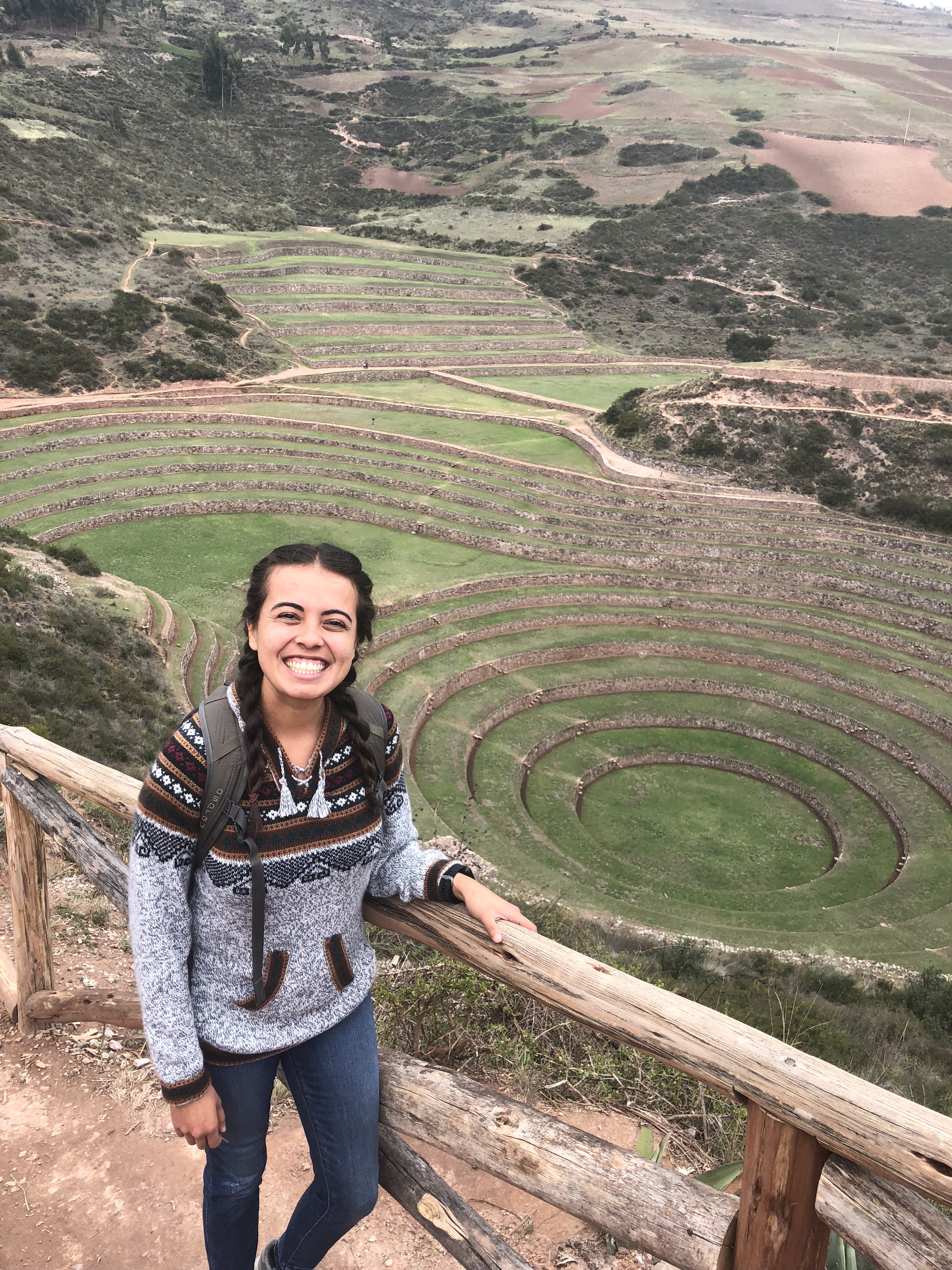
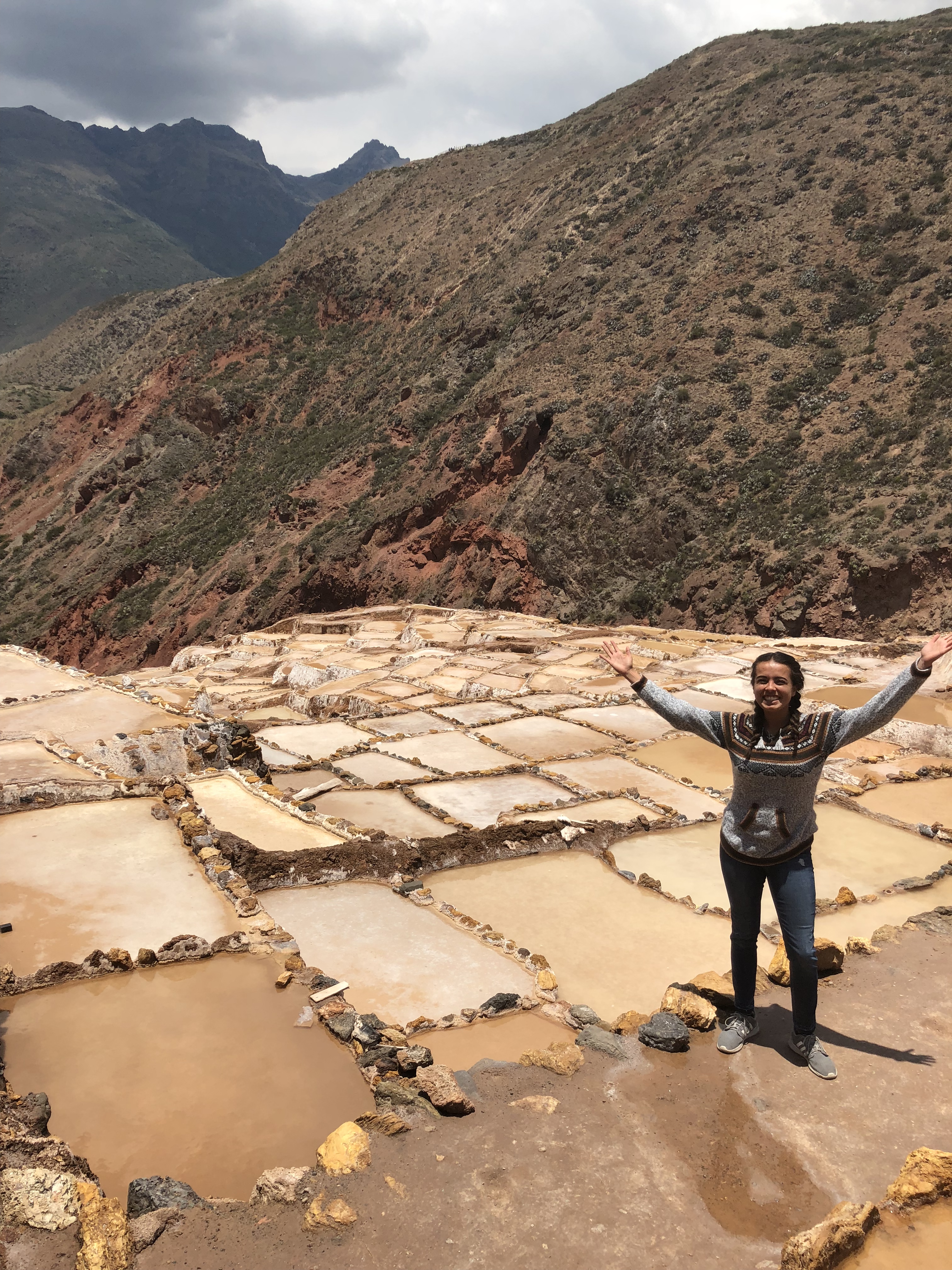
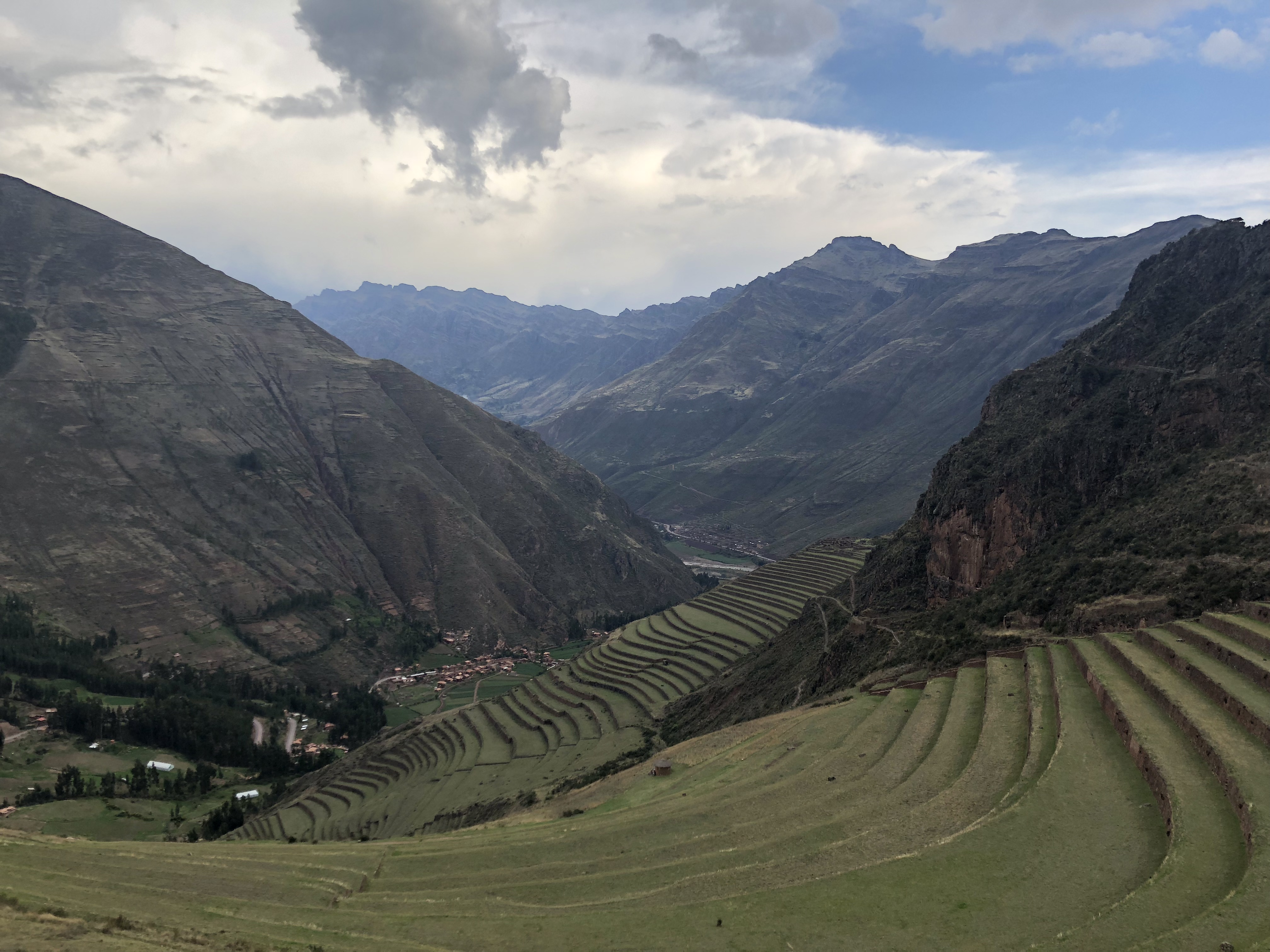
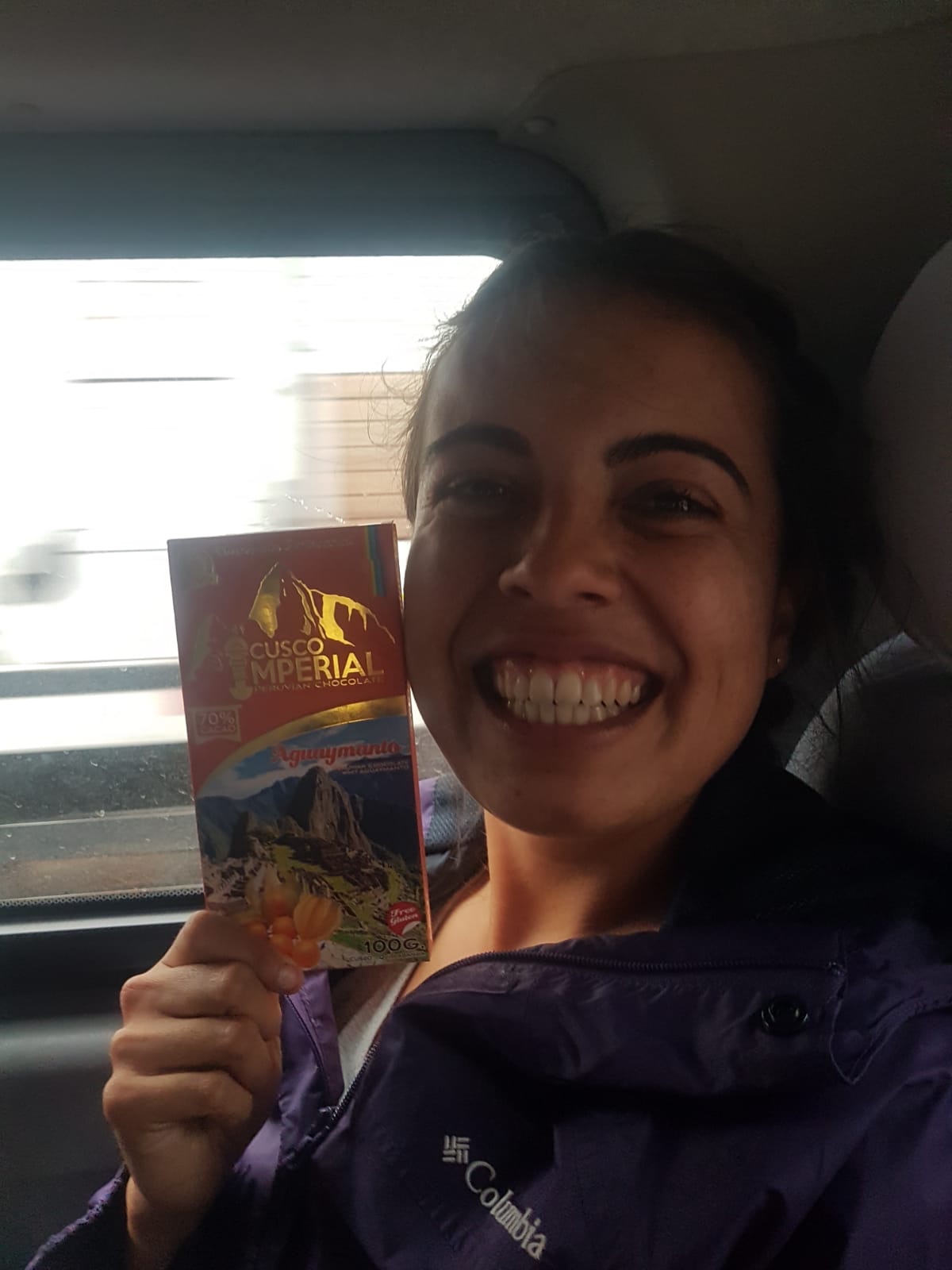
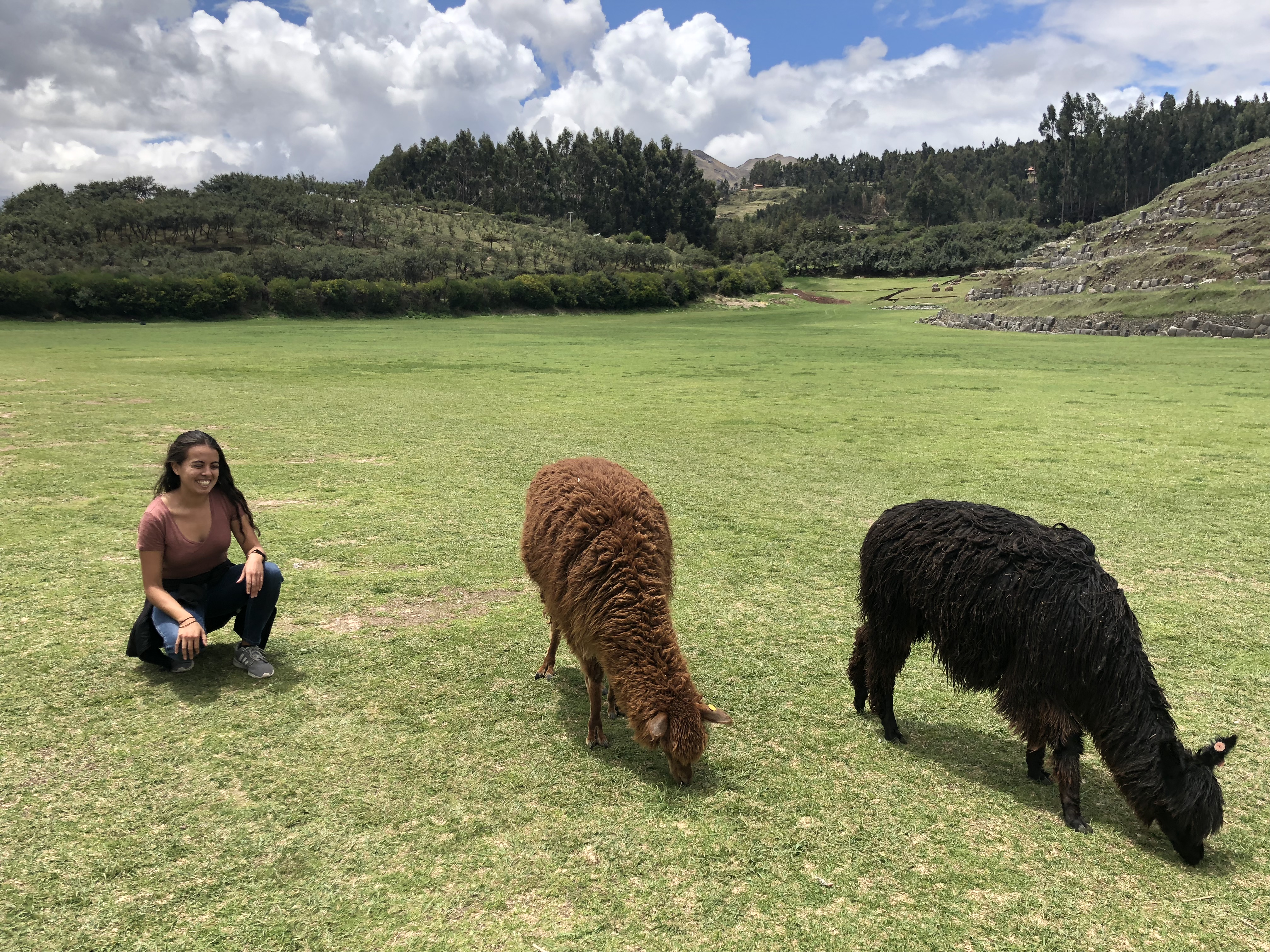
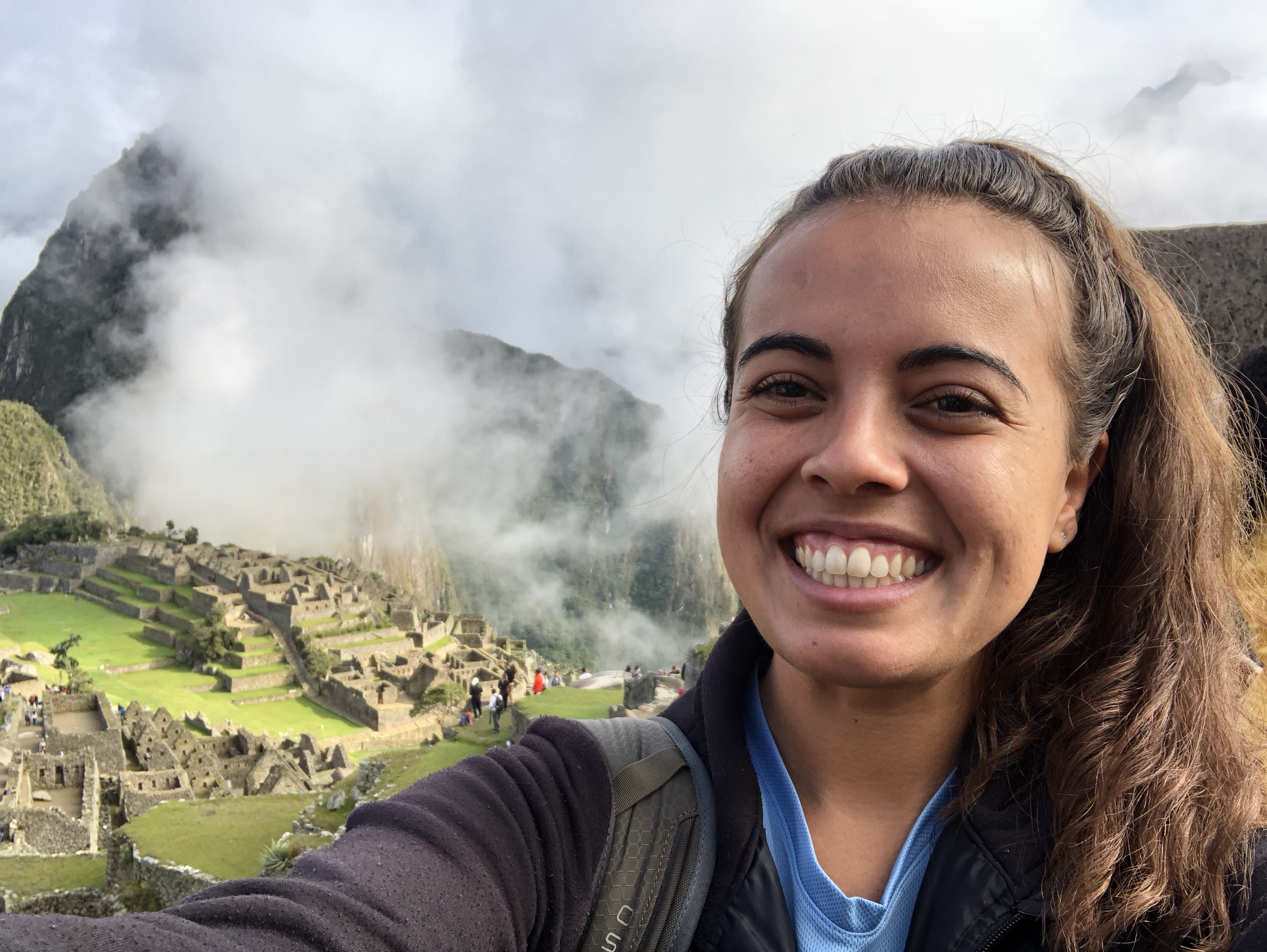

My highlights of all of Peru: the Santa Cruz trek, Juanita, and the Sacred Valley (including Machu Picchu). Peru is a country filled with Incan and pre-Incan history and culture. There is no way to miss opportunities to learn about it no matter where you are. Peru also has proved to be my most difficult country (as of now) because of the challenges I have experienced with my physical health and levels of exhaustion. My digestion has been out of wack which has showed itself in many ways of feeling ill or uncomfortable. My body has literally been showing signs of fatigue and exhaustion with feeling moody, frustrated, having two injuries within the span of two weeks, and having moments of questioning if I really should continue on until March. I’ve pictured in my mind how much “easier” it’d be to just go back home, to my comforts, have a routine again and just know pretty much what my day will entail. Ohhh the comfort of consistency and just knowing what’s next! Nobody ever told me that backpacking would be this draining. Nor have I read it in traveling blogs or online articles I reference to help me navigate through South America. I recently spoke to Pikachu (Mama Agnes) about this and asked her why she didn’t tell me this downfall of being a backpacker. She suggested taking it easy when I know I’m feeling this way and settling in one place for a longer period of time to rest and sometimes just do nothing. Talking more and more to friends who are traveling or who have experienced this reassure me that I need to do this more often. Peru truly took a level of energy out of me that left me feeling depleted and irritable. The constant long arduous bus rides, the quick and constant location changes within a few days, the physical activities that I have been partaking in the past few months and carrying a huge backpack everywhere I go to top it all off, have really caught up to me in a physical and emotional way. I’m realizing I need to slow down and listen to my body if I want my travels to be sustainable all the way through March to each Brazil. Exhaustion has been the theme of my travels the past few weeks and I need to take hold of how I feel if I want to continue enjoying and experiencing the sights, sounds, tastes of what South America can offer me and also give South America what I can offer it. But I do have to get my head and health on better track than what it has been the past weeks. And those are my next steps as I am in Bolivia.
P.S. My favorite word that I learned in Peru is Pachamama, meaning Mother Earth.
Your gift to support my writing is greatly appreciated! Thank you.
Choose an amount
Or enter a custom amount
Gracias.❤️
Donate
 Journeying Through South America
Leave a comment